

Snakes at home in Malaysia — what to know, what to do.
Malaysia is home to nearly 200 species of snakes. Most stay far from human contact — but during dry spells or when rodents move indoors, encounters happen. Here’s the honest guide to identification, prevention, and what to do if you find one in your home.
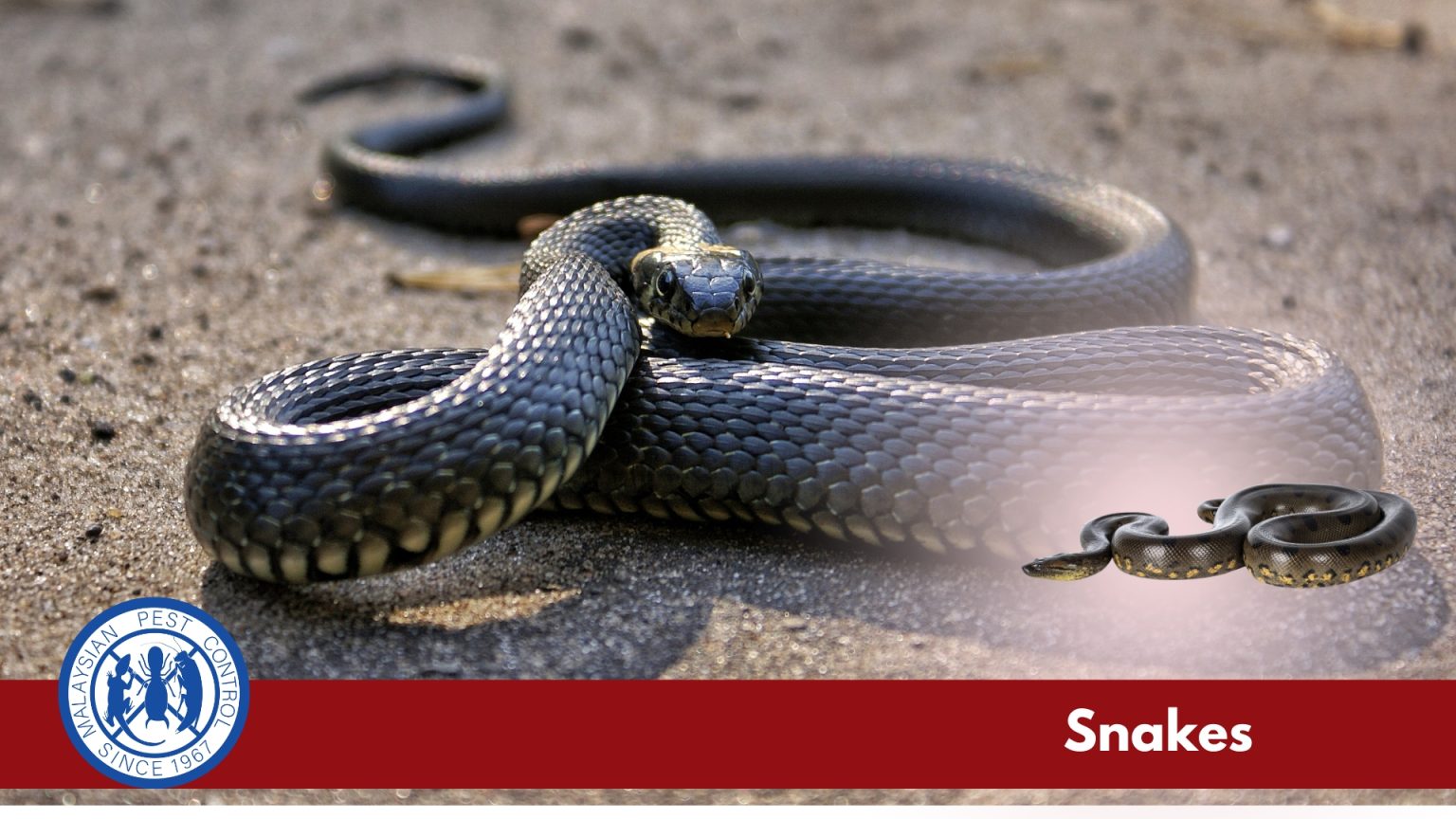
Nearly 200 species — most rarely seen.
Understanding what snakes are, where they live, and why they matter.
Snakes are fascinating reptiles with over 3,000 species worldwide. In Malaysia, according to mybis.gov.my, there are about close to 200 species, ranging in size from a few centimeters to several meters long. Snakes can be broadly categorized into venomous and non-venomous species. Venomous snakes, such as cobras and vipers, pose significant health risks, while non-venomous species like pythons and rat snakes are generally harmless. Snakes do play a crucial role in controlling pest populations, making them an important part of the ecosystem.
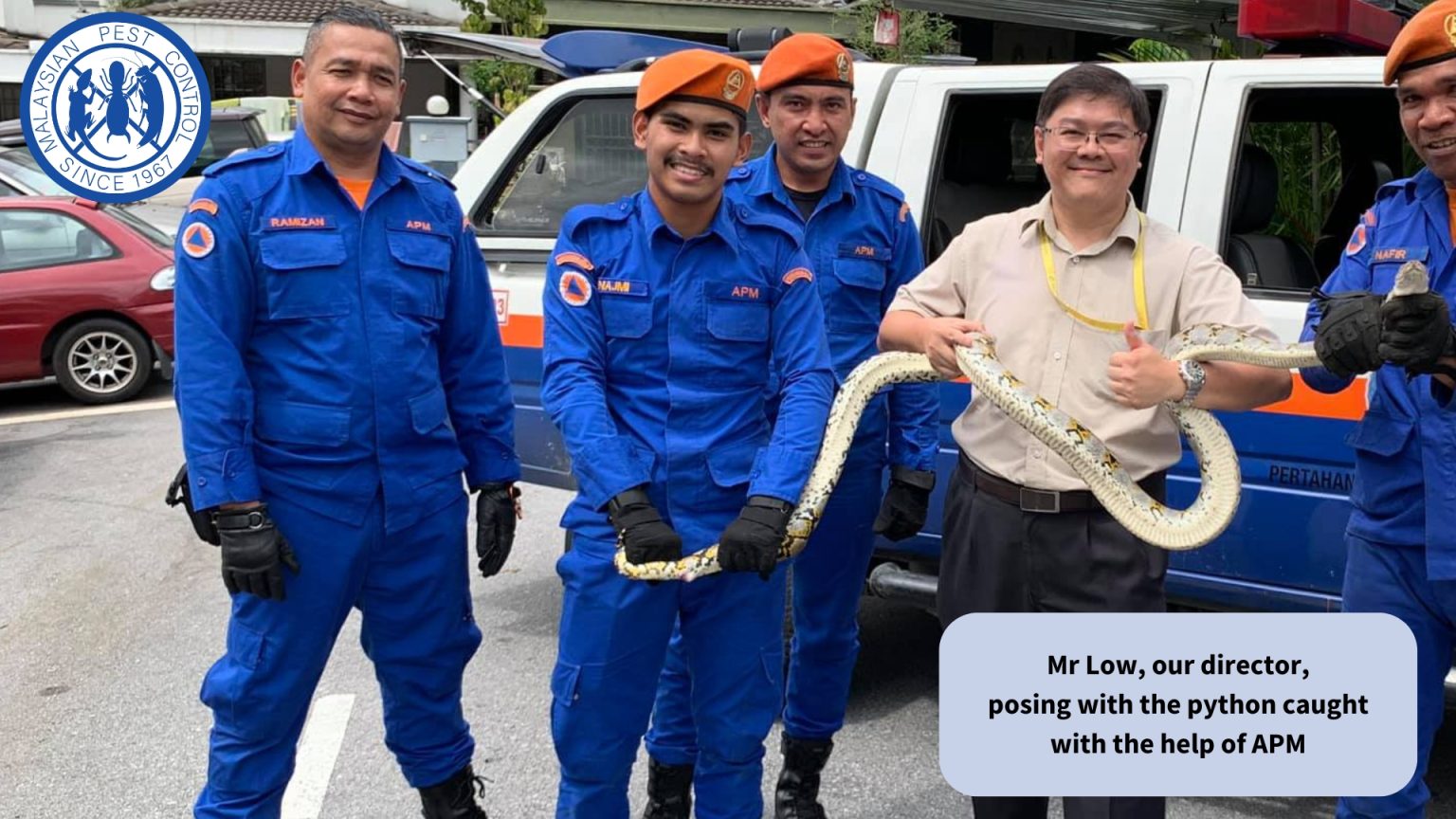
Our Director, Mr Low — visiting a client site after APM captured this python.
Snake catching in Malaysia is handled by APM (Angkatan Pertahanan Awam Malaysia — the Civil Defence Force). They have trained specialists, proper equipment, and provide the service free of charge to residents. If you see a snake in or around your home, call 999 — that is the right number, not us.
Mr Low visited this client’s premises after APM had already captured the python, and posed for a photo. We include it here to underline a point we take seriously: snake handling is not a service we sell. What we do offer — legitimately and effectively — is help with everything before and after the snake encounter (see below).
The three stages of snake development.
Understanding the snake life cycle helps predict where and when you might encounter them.
Egg Stage
Snakes in Malaysia generally lay eggs in secluded, moist environments.
Juvenile Stage
Juvenile snakes are often more vulnerable and seek out hiding spots.
Adult Stage
Adults are more mobile and often seek food, shelter, and mates.
Where snakes live — and why they enter homes.
Snakes don’t want to encounter humans. Understanding what drives them indoors helps prevent it.
Snakes are generally elusive and prefer to avoid human contact. They seek out areas that provide ample food and shelter.
Common in tropical environments, snakes often enter homes seeking prey like rodents, cool areas, or safe hiding spots.
Risks and benefits — the honest picture.
Snakes are both dangerous AND ecologically valuable. Both facts matter.
While many snakes are non-venomous, some species in Malaysia can pose serious health risks if they bite. Malaysians do experience sightings of venomous snakes in their homes.
Snakes help control pest populations by preying on rodents and insects.
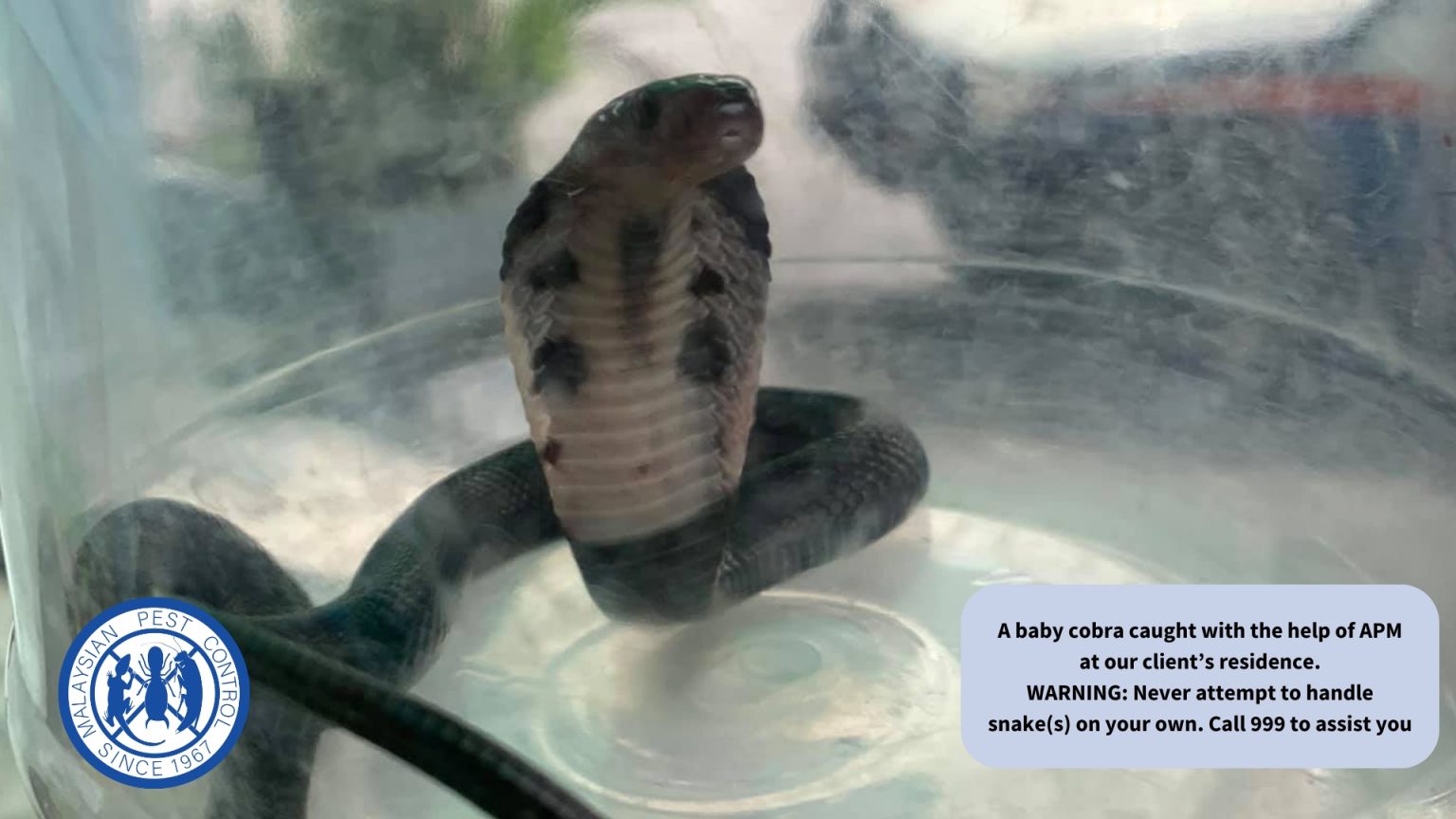
Even a young cobra needs professional handling.
This baby cobra was captured by APM at a Malaysian home. Young cobras are just as venomous as adults — sometimes more dangerously so, as they cannot always control the amount of venom they inject. This is exactly why calling 999 for APM is the right response, not attempting to catch it yourself.
Why snakes suddenly appear during hot weather.
The Malaysian climate directly affects when and where you’re most likely to encounter snakes.
Dry spells drive snakes into your home.
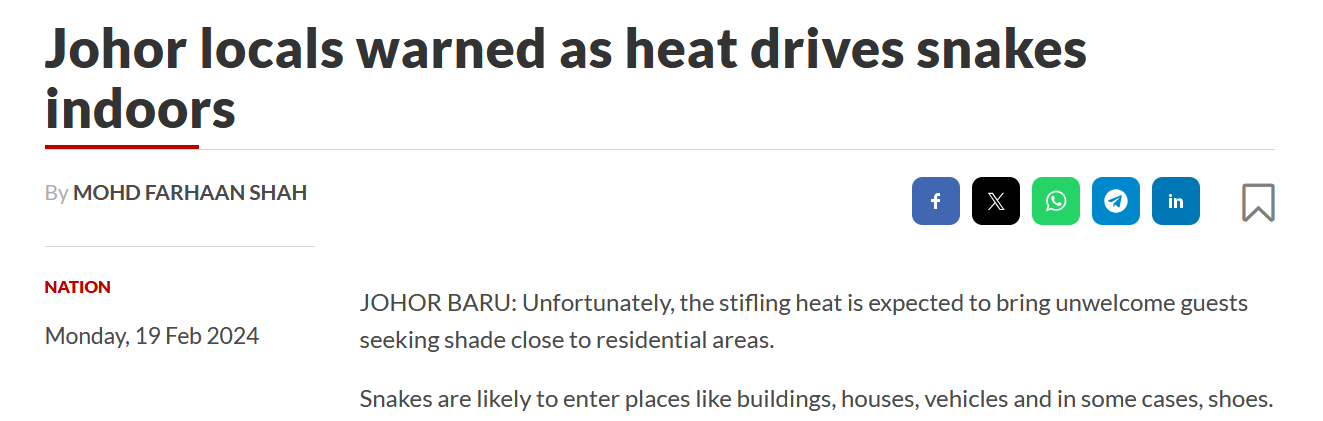
Malaysia sometimes experiences dry spells with prolonged periods of no rain and high temperatures. During these times, snakes that are normally found near residences may seek out cooler areas, leading them to enter homes.
The search for a more comfortable environment during extreme heat can significantly increase the likelihood of encountering snakes indoors.
Where snakes hide inside Malaysian homes.
During hot weather, check these four locations before entering — especially in the morning or after being away.
Near Air Conditioners
Attracted by the cool, shaded areas.
Near Shoe Cabinets
Attracted by cool, shaded areas — and even inside your shoes.
Inside Cars
Warm engine compartments can attract snakes.
Near Toilets
Damp and dark bathrooms provide a suitable environment.
Frequent sightings mean something else is there too.
Frequent sightings of snakes indicate the presence of attractants such as rodents. Identifying and managing these attractants can help reduce snake encounters.
Four practical steps every homeowner can take.
Simple actions that reduce the likelihood of snake encounters.
Seal gaps and holes to prevent entry.
Maintain a clean environment and manage rodent populations.
Reducing rodent populations minimizes the primary food source for snakes. This is the most effective long-term prevention.
Sulfur can be used as a repellent, although sulfur does not have much scientific evidence on its effectiveness, and sulfur itself does not cause any harm to the snakes — it acts as a repellent as the smell is disliked by snakes.
Threatened by snakes at your residence? Call 999 for APM’s help.
APM (Angkatan Pertahanan Awam Malaysia — Civil Defence Force) has trained specialists for safe snake removal. This service is available 24/7 across Malaysia, and it is provided as part of Malaysia’s emergency services.
While waiting for APM
- If the snake is resting, do not disturb it. Keep everyone (especially children and pets) at a safe distance and monitor from a distance.
- If the snake is aggressive, you can use an aerosol insecticide (e.g., Ridsect) and spray continuously (fog it). The insecticide will cause the snake to become disoriented and more manageable for APM to handle upon arrival.
APM catches the snake. We stop the next one from coming.
Snake response in Malaysia divides neatly into three jobs — and only two of them belong to a pest control company. APM handles the immediate catch (free, call 999). Once the snake is gone, though, the more important question becomes: what stops the next one from arriving? The answer isn’t sulfur or repellents. It’s removing what attracts snakes in the first place — the rats and rodents living in and around your property.
Snakes are opportunistic hunters. They follow their prey. In Malaysian residential areas, that prey is almost always rats, mice, and small rodents — the same pests that damage food storage, spread disease, and destroy wiring.
Bonus: solving the rat problem also protects your family from disease (leptospirosis, salmonella), food contamination, structural damage, and wiring destruction. One treatment programme addresses multiple risks at once.
Snake sighted? Call APM. Snake suspected but unseen? Now we can help.
Remove the food source — remove the reason snakes visit.
These are the pests that attract snakes to Malaysian homes. Treating them means fewer future snake encounters.
Rats and rodents are the primary food source for Malaysian snakes. Eliminate them, and snakes have no reason to enter your property.
Small snakes and juveniles feed on insects like cockroaches. Reducing your cockroach population removes another attractant.
Ants attract other insects, which attract small predators, which can attract snakes. Break the chain early with targeted ant control.
Complete premises inspection covering rodents, insects, and entry points. Comprehensive plan for snake prevention.
Snake suspected but not seen? We set up snake cages.
APM can only catch snakes they can see — a visible snake in an accessible location. But what if you’ve had a sighting (yours, a neighbour’s, or evidence like shed skin or droppings) and the snake has since disappeared into your premises? APM cannot help with that scenario. We can. Our specialists set up professional snake cages in strategic locations based on identifying travel paths and hiding spots, then monitor and reset them until the snake is captured.
Related pest guides for Malaysian homes.
The pests that attract snakes are the same ones that pose direct risks to your family. Understanding them is the first step to prevention.
 English
  简体中文
简体中文  Bahasa Melayu
  日本語
日本語  한국어
한국어  العربية