

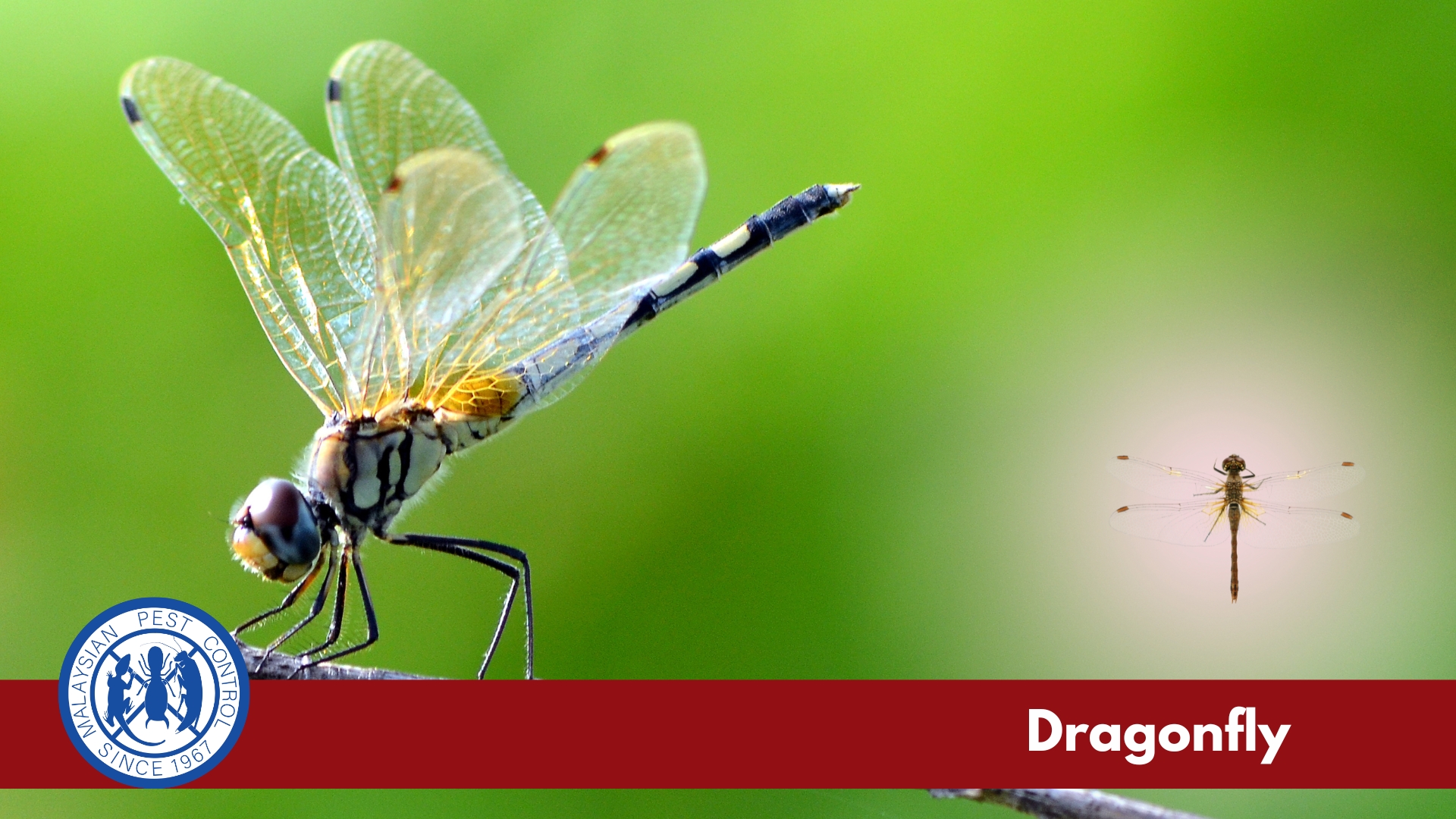
Dragonflies — nature’s mosquito hunters.
Often mistaken for pests, dragonflies are actually one of the most beneficial insects you can have near your home. A single dragonfly consumes 30 to 100 mosquitoes every day — helping protect your family from the pests that really matter.
Not a pest — a garden ally.
Dragonflies deserve a better reputation than they usually get in Malaysian homes.
Dragonflies are often mistaken for pests, but they are actually beneficial insects. Known for their vibrant colors and agile flight, dragonflies help control populations of smaller, harmful insects.
The three stages of a dragonfly’s life.
Understanding the dragonfly lifecycle helps explain why they need clean water and healthy environments to thrive.
Egg Stage
Dragonflies lay their eggs in or near water. The eggs hatch into aquatic larvae, called nymphs.
Nymph Stage
Nymphs live underwater and are voracious predators, eating other aquatic insects and even small fish.
Adult Stage
After molting, nymphs transform into winged adults. Adult dragonflies are powerful fliers and continue to hunt smaller flying insects.
Aerial acrobats near freshwater.
Dragonflies are diurnal and can often be seen near water bodies. They are territorial and are known for their aerial acrobatics.
They prefer environments near freshwater like ponds, lakes, and rivers. The presence of aquatic vegetation is crucial for their lifecycle.
Why dragonflies are good news for your home.
The honest picture of what dragonflies do — and why they’re often unfairly labelled as pests.
Dragonflies are natural predators of mosquitoes and other pests. A single dragonfly can eat between 30-100 mosquitoes per day, helping to reduce the population of these harmful insects.
Sometimes, people may mistakenly view dragonflies as pests due to their resemblance to other large, flying insects. In reality, they help control the insects that are actually harmful.
Want more dragonflies? Here’s how.
Three simple garden design choices that make your property attractive to these beneficial insects.
Water Features
Adding a pond or water garden can attract dragonflies. Ensure there is aquatic vegetation for them to lay eggs.
Vegetation
Planting native plants around water sources can provide perches and breeding grounds for dragonflies.
Avoid Pesticides
Reducing the use of pesticides in your garden helps maintain a healthy environment for dragonflies and their prey.
Dragonflies are amazing — but the numbers don’t always add up.
A single dragonfly eating 100 mosquitoes a day sounds impressive, until you realise a single mosquito can lay 100+ eggs at once, and Malaysian conditions produce ideal breeding grounds year-round.
Mosquitoes eaten per dragonfly, per day. Beneficial but limited by dragonfly population — which is typically small in urban areas.
Typical mosquito population reduction from targeted MPC treatments — fogging, larvicide, and source elimination — while preserving beneficial insects like dragonflies.
Modern mosquito control uses targeted treatments — larvicide in specific breeding sites, thermal fogging during dusk activity peaks, and source reduction — that dramatically reduce mosquito populations without broad-spectrum pesticide use that would harm beneficial insects.
Protecting Malaysian families since 1967 — with respect for the ecosystem.
Complement nature — with targeted pest control.
Dragonflies focus on flying insects. Our services cover the full range — from what dragonflies eat, to the ground-based pests they can’t reach.
Other creatures in Malaysian homes and gardens.
Explore more guides — including other beneficial insects, and the pests worth actually paying attention to.
 English
  简体中文
简体中文  Bahasa Melayu
  日本語
日本語  한국어
한국어  العربية