

Honeypot Ants — the living honey jars of the desert.
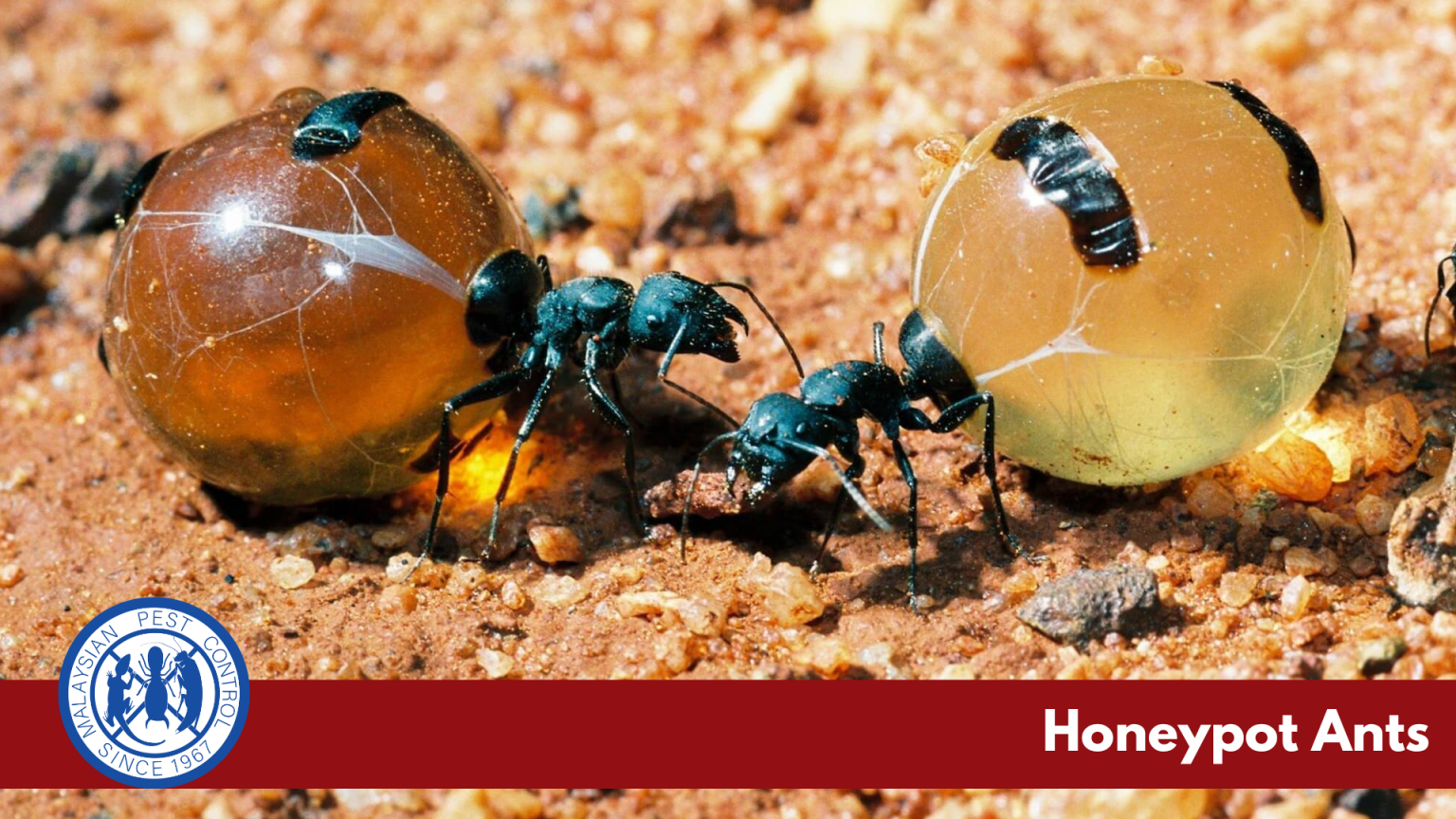
One of the most extraordinary adaptations in the entire insect world. Certain worker ants — called repletes — become living food reservoirs, storing nectar in their swollen abdomens until they resemble tiny grapes filled with liquid gold.
A remarkable evolutionary food storage system.
What makes honeypot ants one of the most fascinating insects on Earth.
Honeypot ants (Myrmecocystus spp.) are famous for their unique ability to store food in the swollen abdomens of specialized worker ants, known as “repletes.” Found in arid regions like deserts, these ants provide crucial food storage for their colonies during times of scarcity.
Some worker ants become walking honey jars.
The four stages of honeypot ant development.
Like most ant species, honeypot ants undergo complete metamorphosis — a process that transforms egg to adult through four distinct stages.
Egg Stage
The queen lays eggs in the nest.
Larva Stage
Larvae are fed by workers and develop over a few weeks.
Pupa Stage
Larvae spin cocoons before emerging as adults.
Adult Stage
Workers gather food, while the queen reproduces.
Life in the arid extremes.
Where honeypot ants live, and how they’ve evolved to survive there.
Honeypot ants primarily inhabit desert regions. Their repletes store liquid food, which sustains the colony during droughts. Foraging ants seek out nectar, insects, and honeydew.
A curiosity, not a threat.
Unlike many ant species, honeypot ants are peaceful residents of their arid ecosystems.
Honeypot ants rarely pose a threat to humans or pets. They are primarily non-aggressive and are more a curiosity than a pest. Their food storage adaptation is a fascinating feature in ant biology.
Certain worker ants, called “repletes,” store nectar and other liquids in their swollen abdomens, which can expand to the size of a grape.
Living food reservoirs — a rare evolutionary trait.
Why this species stands out even among the enormous diversity of ants.
Honeypot ants are special because of their unique food storage ability. Certain worker ants, called “repletes,” store nectar and other liquids in their swollen abdomens, which can expand to the size of a grape. This adaptation allows the colony to survive during times of food scarcity, especially in arid environments. Their ability to function as living food reservoirs is a rare and remarkable evolutionary trait, making them an interesting subject of study in both ecology and biology.
Yes — people actually eat them.
Celebrity chef Gordon Ramsay experiences the “living honey jar” for the first time. A viral moment that introduced honeypot ants to millions.
You won’t find honeypot ants in your Malaysian home.
Honeypot ants are not native to South East Asia. You won’t see them anywhere near your house in Malaysia, unless they are imported as pets from countries in North America or Australia.
Whatever the ant species — we know the Malaysian ones.
Identify what’s actually crawling around your home.
Malaysian homes typically host these species. Explore each to identify what you have — then we can help.
Malaysia’s most notorious household ant. Their body fluid causes skin burns — do NOT crush them on your skin.
Reddish-brown ants known for their painful stings and swarming defensive behaviour when disturbed.
Complete Malaysian ant identification guide covering all common species: Big Headed, Ghost, Weaver, and more.
Full ant control service for Malaysian homes and premises. Fast results, safe treatments, transparent pricing.
More ant species in the encyclopaedia.
Explore the other ant species covered in our Malaysian pest control encyclopaedia.
 English
  简体中文
简体中文  Bahasa Melayu
  日本語
日本語  한국어
한국어  العربية