

Centipedes — the pest that signals a bigger problem.
Fast-moving, venomous, and unmistakably creepy — centipedes are one of the most disliked bugs in Malaysian homes. But here’s what most people miss: they’re actually predators, and their presence usually means other pests are already there.
Creepy — but ecologically important.
The straight facts on centipedes, without the horror-movie framing.
Centipedes are often seen as creepy crawlies, but they play a significant role in the ecosystem. While they can be venomous, they usually do not pose a threat to humans or pets unless an allergic reaction occurs.
The Malaysian centipede worth respecting.
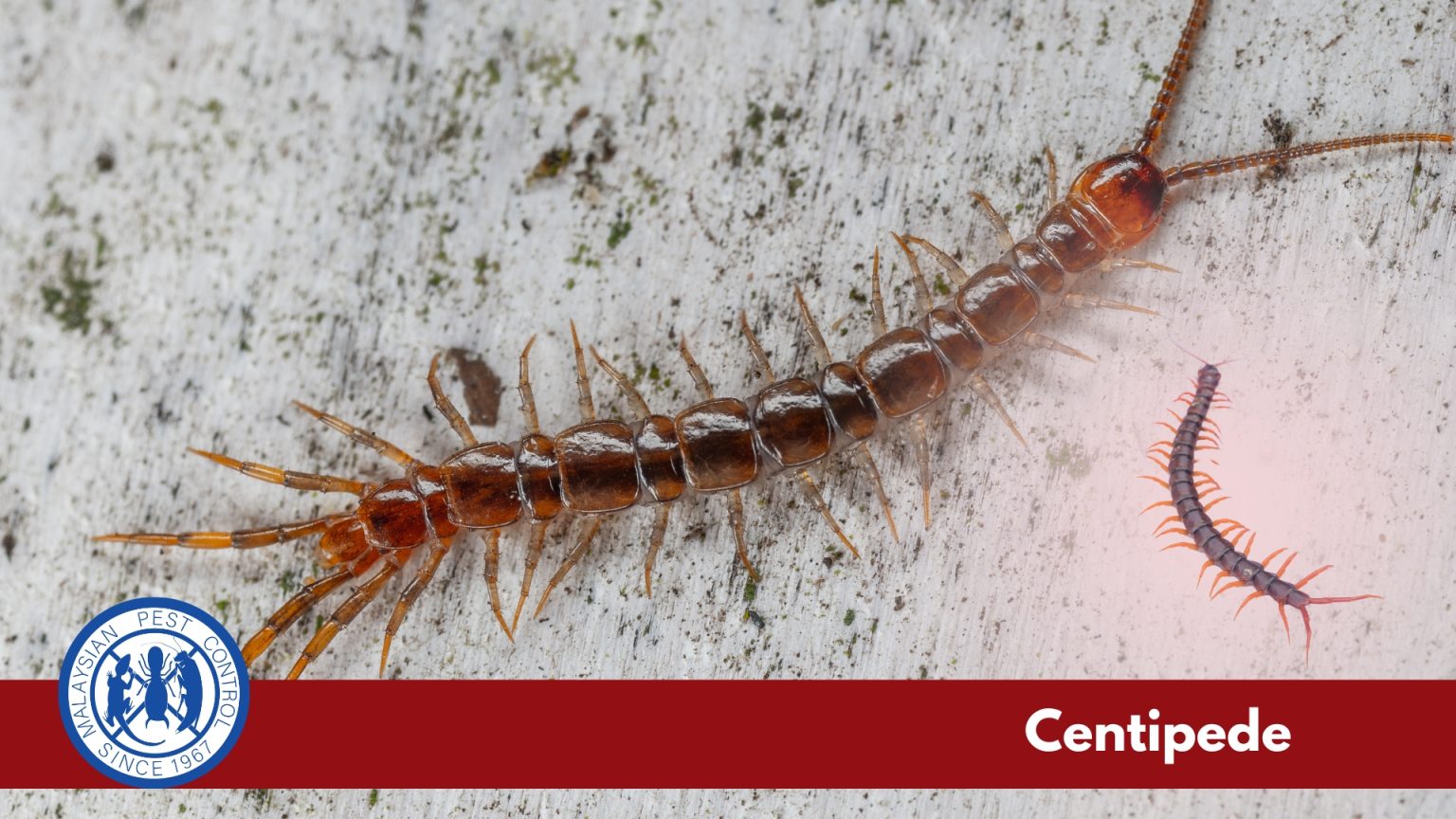
Scolopendra subspinipes — the giant red-headed centipede — is common in Malaysian homes and gardens, especially during rainy season. It can grow up to 20 cm long, has a distinctive orange-red head and dark body, and delivers one of the most painful invertebrate bites in the country.
Bites are rarely fatal but cause intense burning pain, swelling, redness, and sometimes fever that can last hours to days. People with allergies, children, and the elderly should treat any centipede bite as a serious medical concern.
- Wash the bite area immediately with soap and water.
- Apply a cold compress for 10–15 minutes to reduce swelling.
- Take over-the-counter pain relief if needed.
- Seek medical attention if you experience severe swelling, difficulty breathing, chest pain, or signs of allergic reaction (hives, dizziness, nausea).
- If safely possible, photograph the centipede — it helps medical professionals confirm species and appropriate treatment.
The three stages of centipede development.
Centipedes go through gradual metamorphosis, adding body segments and legs with each moult.
Egg Stage
Centipedes lay their eggs in soil or hidden places within homes.
Juvenile Stage
Juvenile centipedes resemble adults but are smaller and have fewer legs.
Adult Stage
Adult centipedes are nocturnal hunters, preying on various insects.
Where centipedes live and hunt.
Understanding centipede preferences helps you predict where they’ll appear — and reduce the conditions they thrive in.
Centipedes are nocturnal and prefer dark, damp environments. They are fast movers and can often be found in hidden spots within homes.
They thrive in places like basements, under sinks, bathtubs, and floor drains. Damp and dark environments are ideal for their survival.
Venom vs beneficial role — the honest picture.
Centipedes are dangerous AND useful. Both facts matter.
Centipedes have venom that can cause extreme pain and allergic reactions in humans. Fatal cases are rare but have been reported.
They are often perceived as pests due to their appearance and presence in horror media. However, they are beneficial predators of other household pests.
Six places to check first.
Centipedes need moisture. If you’re finding them regularly, check these locations for damp conditions or leaks.
Centipedes are telling you something — listen carefully.
Frequent sightings of centipedes may indicate a pest infestation, as they are attracted to food sources like termites, cockroaches, and spiders. Regular sightings in your home suggest that these pests might be present — even if you haven’t seen them directly.
What you can actually do about it.
Immediate steps you can take before calling for professional help.
To manage centipede infestations, address moisture issues and seal entry points. Reducing clutter and using dehumidifiers can help. If centipedes are frequently seen, it may be time to call Malaysian Pest Control for professional assistance.
Kill a centipede? Ten more will follow.
Individual centipedes are easy to kill — a slipper does the job. But if you’re seeing them regularly, killing them one by one won’t solve anything. More will come as long as there’s food (other pests) to hunt.
The permanent solution is removing what attracts them in the first place: cockroaches, termites, ants, and other insects living in your home. Fix the underlying pest problem, and centipedes have no reason to stay.
Bonus: the underlying pests centipedes hunt are usually the ones that cause direct harm to your family — cockroaches spread disease, termites damage structures, ants contaminate food. Solving the centipede problem solves the real problem.
We look for what’s actually causing your pest problem.
Treat the food source — the centipedes leave.
These are the pests centipedes come looking for. Treat them, and you’ll fix both problems — centipedes AND the underlying infestation.
We also handle direct centipede removal — especially the venomous ones.
For clients who want direct centipede treatment — especially removal of large red-headed centipedes (Scolopendra), inspection of suspected nesting areas, or general centipede management — WhatsApp us with photos and premise details. Our specialists will assess and quote.
The pests centipedes are hunting for.
Since centipedes are attracted to other pests, understanding those pests is the fastest way to solve the underlying problem.
 English
  简体中文
简体中文  Bahasa Melayu
  日本語
日本語  한국어
한국어  العربية