マレーシア、クアラルンプール

help@msianpestcontrol.com

トコジラミについて  ›  Do Bed Bugs Cause Disease?
Health Article

Do bed bugs cause disease? The short answer — no.

It’s a fair worry. Bed bugs feed on human blood, leave itchy bites, and infestations can be deeply distressing. But despite all that, bed bugs are not classified as disease vectors. Here’s what the science says — and what they really do cause.

Public health pest Not a disease vector Causes real distress 59 years of pest expertise
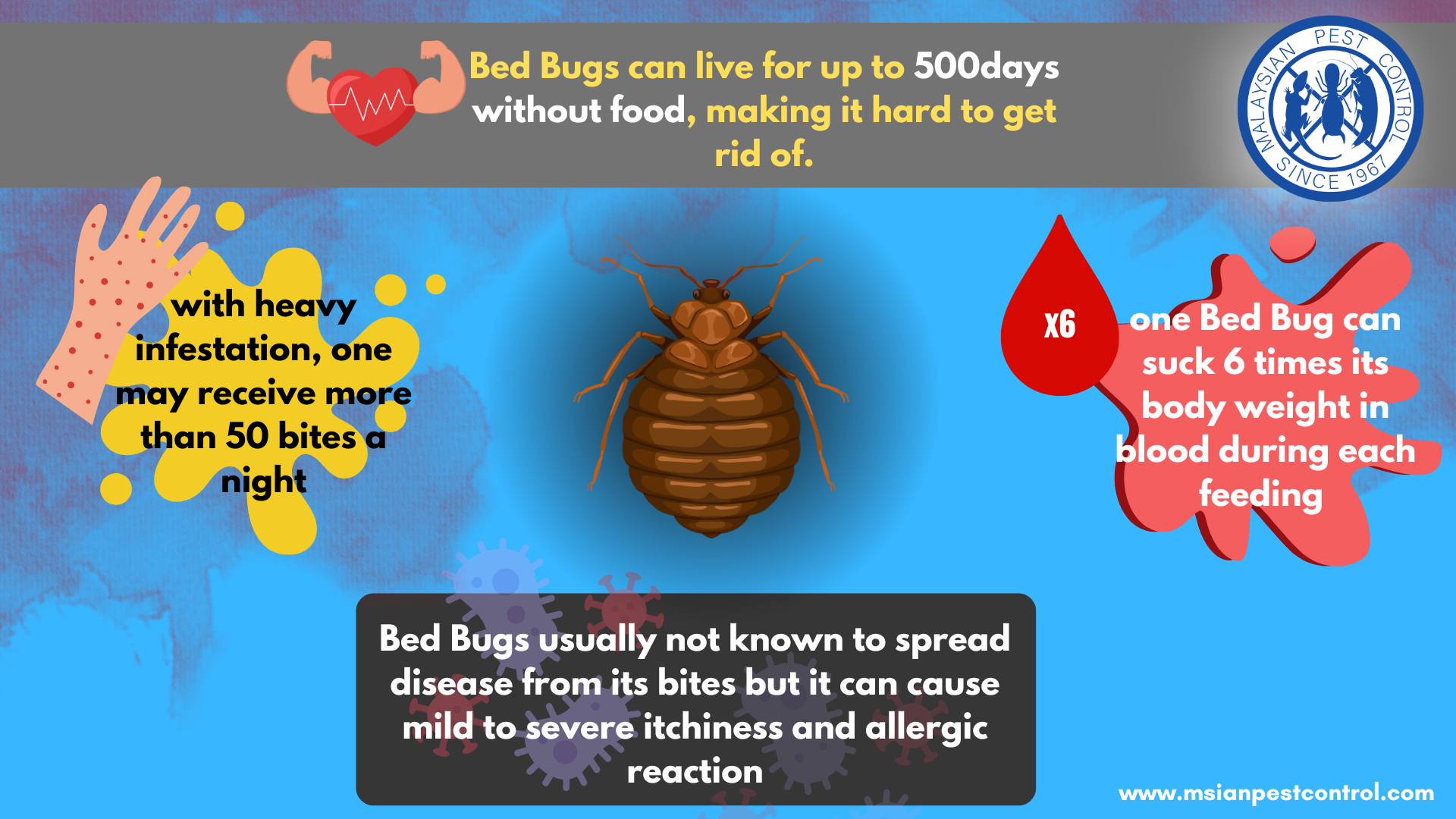
INFOGRAPHIC Bed bug awareness — informational graphic about bed bug health impacts
The Direct Answer

Bed bugs are not known to transmit diseases.

This sometimes surprises people, but it’s well-established. Unlike mosquitoes, fleas, or ticks, bed bugs are not considered disease vectors. They’re classified as a public-health pest — meaning they affect quality of life, not direct infection risk. If you’re worried about catching something serious from a bed bug bite, you can put that worry down. The real impacts are different — and that’s what we’ll cover next.

What They DO Cause

Real impacts — just not the kind you might think.

Bed bugs may not transmit disease, but the impacts of an infestation are still very real. Here’s what they actually cause.

Impact 01

Itchy bites

Red, raised welts that can itch intensely for days. Bites typically appear in clusters on exposed skin.

Impact 02

Secondary infections

Excessive scratching can break the skin, creating openings for bacteria and leading to skin infections.

Impact 03

Sleep disruption

Anxiety about being bitten while sleeping leads to insomnia, restless nights, and accumulating fatigue.

Impact 04

Mental health stress

Anxiety, embarrassment, social withdrawal, and ongoing stress while the infestation is being addressed.

Why Early Action Still Matters

No disease risk doesn’t mean no urgency.

Bed bugs aren’t a public health hazard in the infectious-disease sense, but their presence can still significantly affect day-to-day life. Constant itching, lost sleep, anxiety about going to bed, embarrassment around guests, and the fear of spreading the problem to others — these aren’t trivial.

Addressing a bed bug infestation promptly does two things: it prevents the physical symptoms from compounding, and it protects your mental well-being from prolonged stress. Bed bugs are also notoriously difficult to eradicate without professional intervention — the longer they’re left, the harder the eventual treatment.

How They Spread

The world’s best hitchhikers.

Bed bugs don’t fly, jump, or run. But they’re masters of catching rides — which is why they spread so effectively across hotels, apartments, and homes.

Hotels & travel

They climb into luggage, suitcases, and travel bags during your stay. The most common way bed bugs return home with travellers — even from clean, well-rated hotels.

Used furniture

Second-hand mattresses, sofas, headboards, and upholstered chairs frequently carry hidden bed bug populations into new homes. Inspect carefully before bringing anything home.

Apartment-to-apartment

In condominiums and apartments, bed bugs migrate between units through walls, floor gaps, and shared structures. One unit’s infestation can quickly become a building’s problem.

Myths Busted

Common bed bug misconceptions.

Bed bugs are surrounded by myths that lead people to delay action or use the wrong treatments. Here’s what’s actually true.

MYTH
Bed bugs only infest dirty homes.
Truth Bed bugs don’t discriminate. They’re found in clean luxury hotels, well-kept homes, and pristine apartments. They’re attracted to body heat and CO₂, not dirt.
MYTH
Bed bugs are like dust mites or fleas.
Truth They’re a different species entirely. Bed bugs (トウヒヒメツルハナヒメツル) have different behaviour, hiding patterns, and treatment requirements than dust mites or fleas.
MYTH
DIY sprays from the supermarket will solve it.
Truth Bed bugs have developed resistance to many common pesticides. Surface sprays rarely reach the cracks where bed bugs hide. Professional treatment is usually needed.
MYTH
If you can’t see them, they’re gone.
Truth Bed bugs are masters of hiding. Adults can survive months without feeding, waiting in cracks and crevices. Absence of visible bugs doesn’t mean absence of infestation.
専門家の助けが必要ですか?

No disease — but still worth handling properly.

Bed bugs may not be vectors for disease, but they’re notoriously stubborn and difficult to eradicate. Our specialised bed bug programme covers thorough inspection, advanced treatment targeting all life stages, and post-treatment monitoring to confirm elimination. Get peace of mind back.

Continue Reading

More on bed bugs.

Our other guides cover bed bug biology, treatment processes, and DIY approaches in depth.

ja日本語