マレーシア、クアラルンプール

help@msianpestcontrol.com

虫と害虫  ›  About Stored Product Insects
虫と害虫百科事典

Stored product insects: tiny bugs, massive losses.

Stored product insects — known professionally as SPIs — are a group of beetles, weevils, moths, and mites that infest and damage stored foods, grains, flour, dried products, and packaged goods. In homes they ruin pantry items. In commercial food operations, they cause audit failures, product recalls, and significant financial loss.

Acronym
SPIs
Main Types
Beetles · Weevils · Moths
Lifecycle
~1 month
What Are SPIs?

The pests that target stored, packaged, and dry goods.

SPIs are not a single species — they’re a functional category. Beetles, weevils, moths, and mites that have evolved to live in and consume dry products: grains, flour, rice, cereals, nuts, dried fruits, pet food, spices, chocolate, even cardboard packaging.

They cause damage in two ways: direct consumption (eating the product) and contamination (faeces, webbing, body parts, shed skins, and the smell or taste they leave behind making products unfit for consumption).

Beetles Weevils Moths Mites
Six Common SPI Species

What’s likely in your store.

Different species target different products. Identifying which SPI you’re dealing with helps determine the affected products and the right control approach.

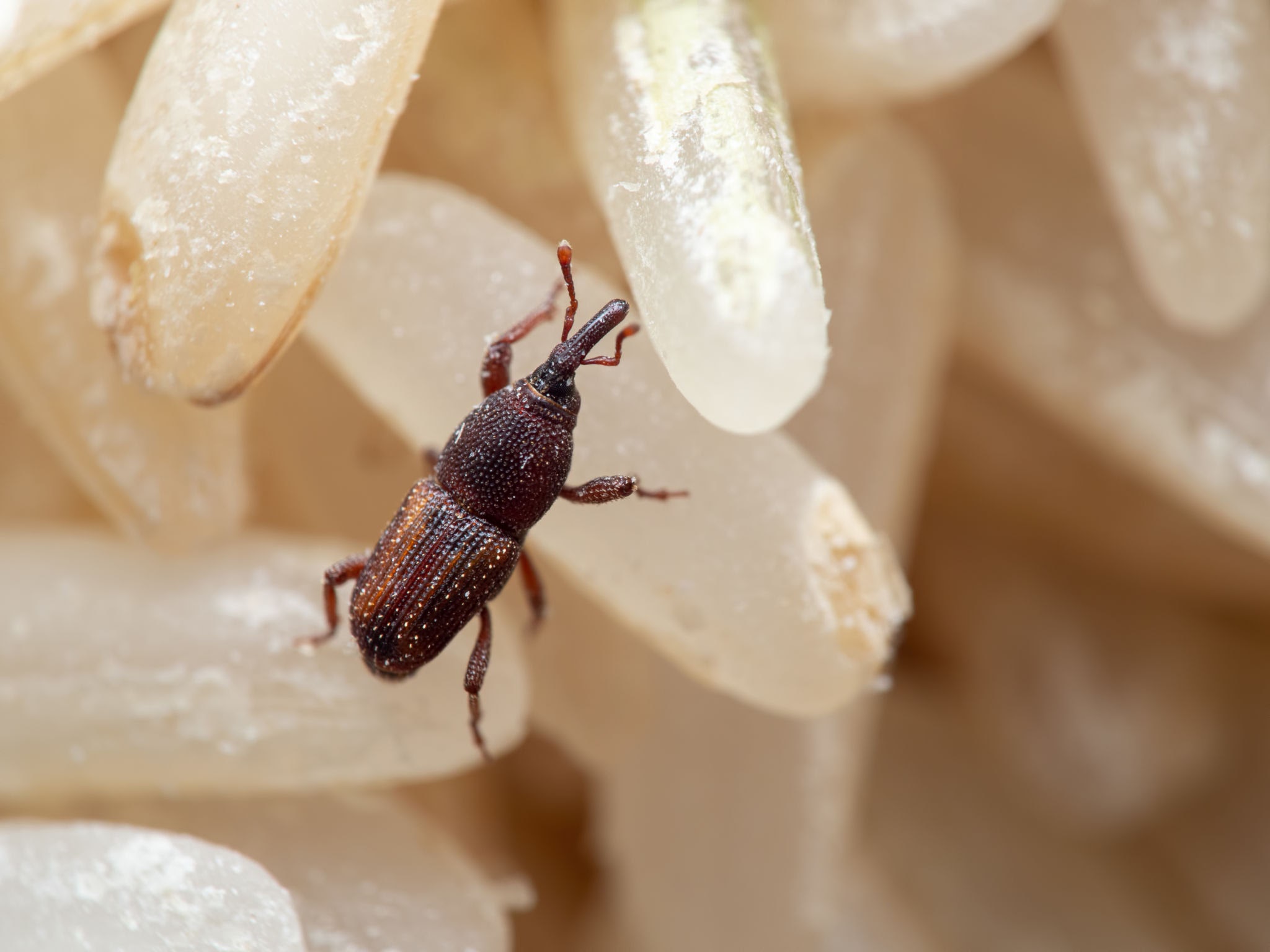
Rice weevils (Sitophilus oryzae) — common stored grain pest in Malaysia
シトフィルス・オリゼ
コクゾウムシ
Targets · Rice, grains, broader range

Similar to grain weevils but 飛ぶことができる — letting them spread further and infest a wider variety of stored products. A major concern in Malaysian rice mills and grain storage.

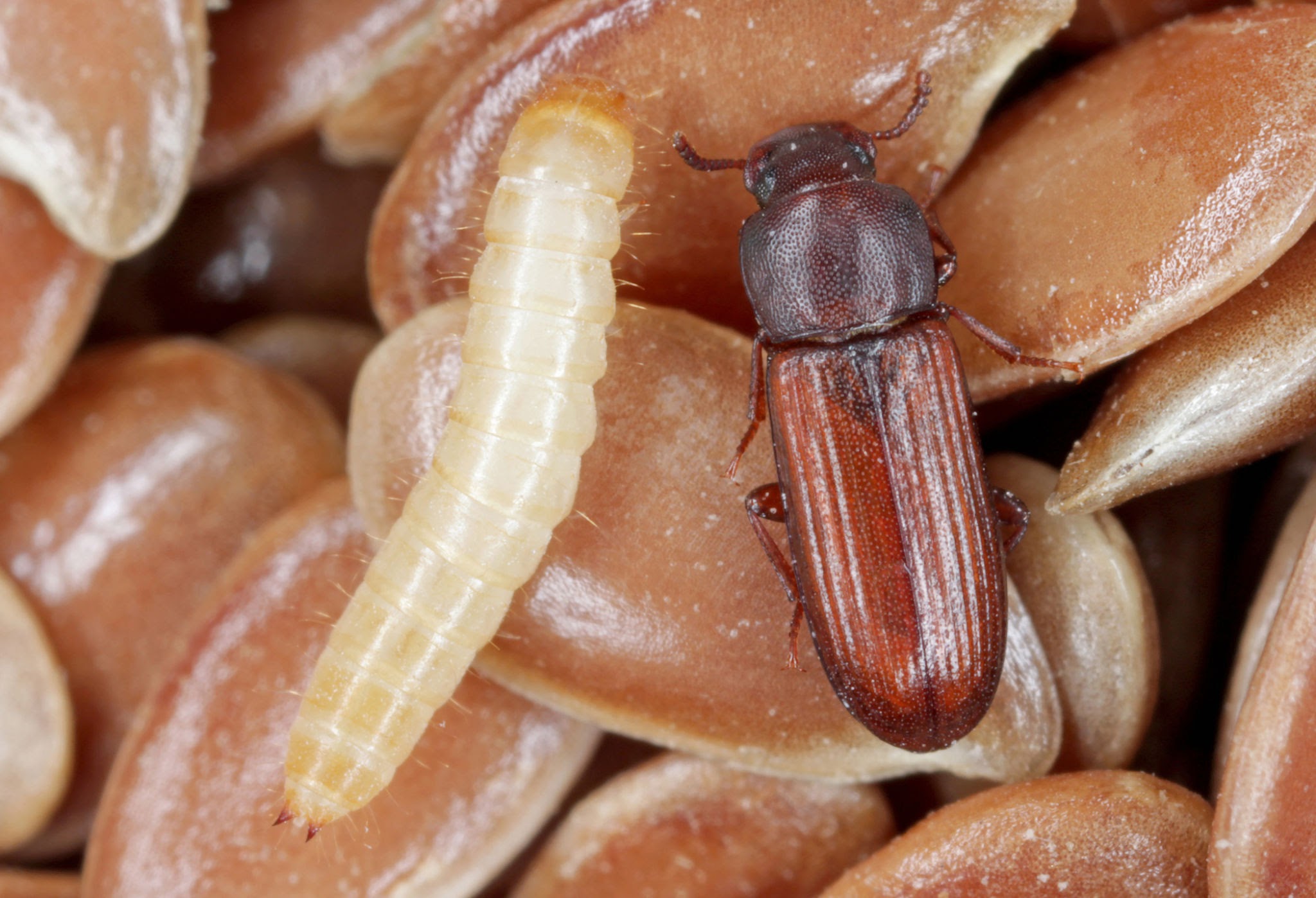
Flour beetles (Tribolium spp.) — red and confused flour beetles common in flour and grain products
トリボリウム属
コクゾウ
Targets · Flour, grain products

Red and confused flour beetles. Feed on broken kernels and flour dust, but their waste products and shed skins contaminate even whole, undamaged grains.

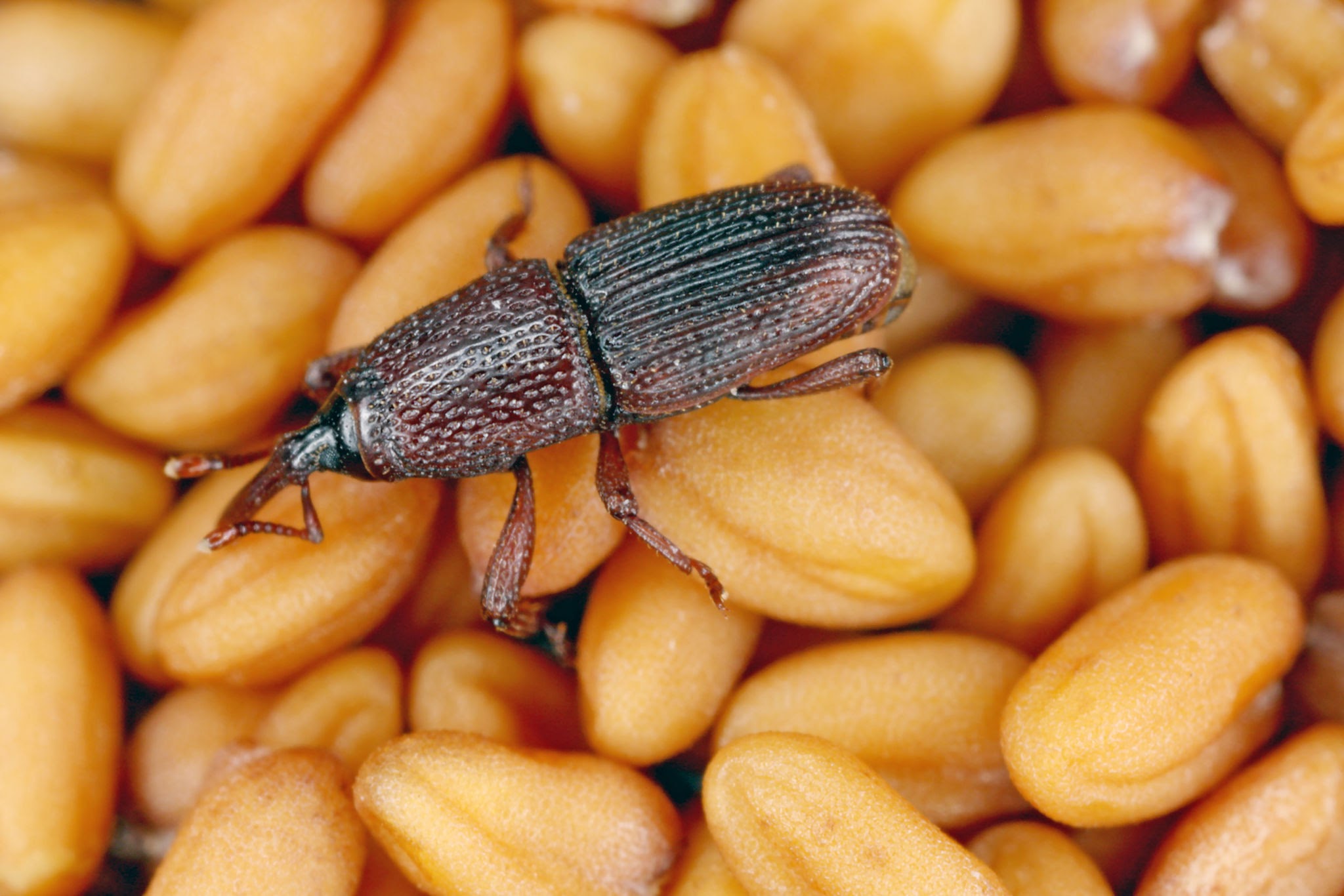
Grain weevils (Sitophilus granarius) — bore into grain kernels to lay eggs
シトフィルス・グラナリウス
コクゾウムシ
Targets · Whole grains

The female bores a hole into a grain kernel and lays an egg inside. The larva develops inside the kernel, consuming it from within — destroying the grain from the inside out.

クロマグロ
Indian Meal Moths
Targets · Dried foods broadly

Larvae infest grains, nuts, chocolates, and candies. They spin silken webs in infested products, causing visible clumping and spoilage — often the first sign of infestation.

オリザエフィルス・スリナメンシス
Sawtoothed Grain Beetles
Targets · Cereals, dried fruit, nuts, sugar

Notorious for their ability to enter well-sealed packages. Their flat bodies and saw-toothed edges let them slip through packaging seams others can’t penetrate.

シトトロガ・セレアレラ
Angoumois Grain Moths
Targets · Stored corn, grains, seeds

Primarily pests of stored corn, where larvae feed on the kernels. Can also infest other grains and seeds. Adults are small, pale, with distinctive pointed wings.

Biology Common To All SPIs

Why SPI infestations escalate so quickly.

Different SPI species behave differently, but three biological traits are common to nearly all of them — and together they explain why a small problem becomes a large one in weeks.

Trait 01

High reproductive rate

Females typically lay hundreds of eggs during their lifetime. Combined with fast maturation, populations escalate rapidly under favourable conditions.

Trait 02

Fast lifecycle

Complete metamorphosis (egg → larva → pupa → adult) can finish within a single month under optimal conditions — meaning multiple generations per year, sometimes per quarter.

Trait 03

Dry-condition tolerance

SPIs are built for low-moisture environments. Many species can survive and reproduce in products with very low water content — exactly the conditions of grain stores and dry warehouses.

For Commercial Operations

SPI contamination is a business-ending risk.

For food manufacturers, F&B operators, warehouses, and retailers — a single SPI incident can cascade into audit failures, regulatory action, and reputational damage that takes years to repair.

01

Audit failure

HACCP, ISO, and supplier audits explicitly check for SPI evidence. A single live insect or evidence of activity can fail an audit and trigger corrective-action requirements.

02

Product recalls

Consumer-facing contamination — visible insects, webbing, faeces in retail products — typically forces full batch recalls. Costs run into hundreds of thousands.

03

Customer loss

Retailers and downstream buyers drop suppliers who can’t demonstrate consistent SPI control. One incident can cost years of relationship-building.

Sectors At Risk

Where SPI control matters most.

Some operations face SPI risk every single day. If you run any of these, ongoing SPI management isn’t optional — it’s a core operational requirement.

Rice mills & grain processors

Grain weevils, rice weevils, and Angoumois moths target bulk storage. SPI presence threatens both yield and downstream customer relationships.

Bakeries & flour producers

Flour beetles thrive in flour and grain residue. Even small accumulations under shelving or in machinery seams can sustain infestations.

F&B operators

Restaurants, cafes, hotels, central kitchens — anywhere dried ingredients are stored. SPI sightings create immediate health-department exposure.

Warehouses & distribution

Bulk dried goods, cardboard packaging, pet food. Logistics centres handling diverse product types face cross-contamination risks.

Supermarkets & retail

Customer-facing aisles holding flour, rice, cereals, pet food. A single visible incident generates complaints and social media exposure.

Homes & domestic pantries

Most home SPI problems are isolated and resolved by discarding affected products. Persistent or recurring problems may need professional attention.

Management Strategies

How SPIs are actually controlled.

Effective SPI management looks very different at home versus in commercial operations. Here’s what each context requires.

Home Context

For Malaysian households.

Home SPI problems are usually localised and manageable without professional treatment.

  • Discard affected products immediately — don’t try to salvage
  • Inspect adjacent items in the same pantry zone
  • Clean shelves thoroughly with hot soapy water
  • Store dry goods in airtight containers going forward
  • Check new groceries before they enter the pantry
Commercial Context

For Malaysian businesses.

Commercial SPI management requires structured, ongoing protocols — not one-off responses.

  • Regular monitoring & inspection with documented records
  • Temperature & humidity control to slow reproduction
  • Physical barriers & sealing of stored product zones
  • Fumigation or controlled atmospheres where appropriate
  • Insect growth regulators (IGRs) for population suppression
  • HACCP-compliant documentation for audit readiness
Three Prevention Pillars

Stop SPIs before they establish.

Prevention is always less expensive than remediation. Three pillars cover the practical baseline for both homes and commercial operations.

01

Hygiene

Eliminate food residues that attract and sustain SPI populations. Regular cleaning of storage areas, including hard-to-reach corners, shelf seams, and floor cracks.

02

Storage

Use airtight, sealed containers for grains, flour, cereals, and dried foods. Rotate stock so older products are used first. Quarantine new arrivals before integrating with existing storage.

03

Temperature

Keeping storage areas cool slows SPI reproduction. For commercial operations, dedicated climate control is often the most cost-effective prevention strategy.

害虫問題でお困りですか?

SPIs in your operation — let’s get them under control.

For homeowners, SPI problems are usually manageable. For commercial food operations, ongoing professional SPI management isn’t optional. Whether you need HACCP-compliant treatment, audit-ready documentation, or just want to know your premise is protected — we can help.

続きを読む

弊社のその他の記事 害虫百科事典。.

Other pests of concern for food premises and dry-goods storage.

ja日本語