マレーシア、クアラルンプール

help@msianpestcontrol.com

シロアリについて  ›  Life Cycle
Termite Biology

How termites grow, multiply, and start new colonies.

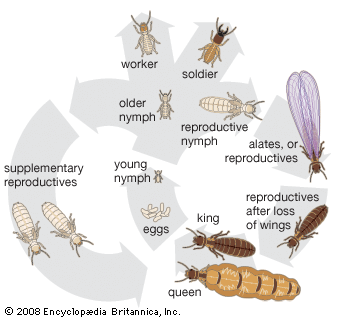
Termites undergo incomplete metamorphosis — transitioning from eggs to nymphs and then specializing into one of three adult castes: workers, soldiers, or reproductives (alates). Here’s the full developmental journey, with the timeframes that matter.

Egg → Worker
~2–3 months
女王の寿命
10 – 30 years
Colony Maturity
3 – 5 years
LIFECYCLE Animated diagram showing the termite life cycle stages — egg, nymph, and adult castes (worker, soldier, alate) Image: Britannica
The Biological Process

Incomplete metamorphosis, three-caste outcome.

Unlike butterflies (which transform completely from caterpillar to adult), termites pass through incomplete metamorphosis — meaning the nymph already resembles a small adult and grows in stages, rather than transforming dramatically.

What makes termite development unusual is the three-path outcome. The same egg can become a worker, a soldier, or a winged reproductive (alate) — depending on environmental factors, colony needs, and pheromonal signals from the queen and king. The colony, in effect, decides what each new termite becomes.

ステージ01

The egg stage — where it all begins.

Every termite begins life as an egg laid by the colony queen. Early on, the queen produces only a small number, but as the colony matures, her output grows dramatically.

01
Stage

⏱ 1 – 2 weeks to hatch

Continuously laid by the queen. Tended and protected by worker termites.

The termite life cycle begins with the queen laying eggs. Early in the colony’s life, she produces a smaller number — but as the colony grows, she can lay thousands per day. Mature colonies of certain species see queens producing tens of thousands of eggs daily.

Eggs typically hatch in 1 to 2 weeks, depending on environmental conditions like temperature and humidity. During this incubation period, worker termites carefully tend, clean, and protect the eggs from predators and dehydration — a continuous full-time activity within the colony.

ステージ02

The nymph stage — three possible paths.

After hatching, termites enter the nymph stage — a crucial period of growth and molting. Nymphs already resemble adults but lack developed wings or reproductive organs. The path each nymph takes depends on what the colony needs.

Path 01

労働者の育成

⏱ 2 – 3 months to mature

The fastest developmental path. Workers handle foraging, feeding the colony, and building the nest. Most nymphs follow this path.

Path 02

兵士の育成

⏱ 3 – 4 months to mature

Specialised for defence with large mandibles or chemical-spraying abilities. Number of soldiers depends on the colony’s defensive needs.

Path 03

Alate (reproductive) development

⏱ 6 – 12 months to mature

The slowest path. Alates grow wings and reproductive organs in preparation for nuptial flight and starting new colonies.

The specific path a nymph takes is influenced by environmental factors, colony needs, and pheromonal signals from the queen and king — meaning the colony can dynamically adjust how many of each caste it produces.

ステージ03

The adult stage — three lives, three lifespans.

Once mature, termites take on permanent roles within the colony. Each caste has a distinct lifespan — and the differences are striking.

Caste 01

労働者

Lifespan · 1 – 2 years

The colony’s labour force — gathering food, maintaining nests, caring for eggs and young. Wingless and sterile. The most numerous caste.

Caste 02

兵士

Lifespan · 1.5 – 2 years

Defenders of the colony against ant invasions and other threats. Slightly longer-lived than workers, but cannot feed themselves — rely on workers entirely.

Caste 03

Reproductives (King & Queen)

Queen lifespan · 10 – 30 years

After mating flight, alates shed wings and become founding king and queen. The queen lays eggs continuously for decades. The king lives alongside her for similar lengths of time.

Starting a New Colony

From nuptial flight to first workers.

The cycle continues when alates leave their parent colony, mate, and start new colonies of their own. Here’s how a brand-new colony is born — typically beginning in the warm, humid days following monsoon rains.

01

Nuptial flight

Alates leave parent colony in mass swarms, triggered by warm humid weather.

02

Pair bonding

Male and female find each other mid-flight and pair off to mate.

03

Wing shedding

Pair lands, sheds wings, and selects a suitable nesting site (soil, wood, etc).

04

First eggs laid

Queen begins laying — a small batch initially, growing over time.

05

Workers emerge

First workers mature in 2–3 months. Colony is now self-sustaining.

Dispersal Factors

When alates take flight — and why it matters in Malaysia.

Termite swarming in tropical Malaysia doesn’t follow temperate “spring” patterns. Local alates are triggered by warm humid weather following monsoon rains — which can occur multiple times per year.

Factor 01

Season

In Malaysia, alates typically swarm after monsoon rains — when conditions are warm and humid. Multiple swarming events occur per year, not just one season.

Factor 02

Time of day

Most termite species swarm at dusk or during the night to avoid predators like birds. Some species swarm in early morning or after rainfall.

Factor 03

Colony maturity

Colonies must reach a certain size and stability — typically 3〜5歳 — before producing alates in significant numbers.

3–5
Years until first swarm

By the time you see a swarm, the colony is already mature.

This is the most actionable insight from the termite life cycle. If you witness a termite swarm near or inside your premise, the colony producing those alates is already 3–5 years old — meaning years of structural feeding may have already occurred. Swarming isn’t an early warning. It’s a late one.

害虫問題でお困りですか?

Spotted a swarm? Don’t wait until next year.

Termite swarms are a sign that an established, mature colony exists nearby. Whether you’re seeing live activity, planning a new build, or just want to be safe — there’s a termite service for every situation.

ja日本語