マレーシア、クアラルンプール

help@msianpestcontrol.com

虫と害虫  ›  About Termites
虫と害虫百科事典

Termites: silent destroyers, complex societies.

Often mistaken for ants, termites are actually more closely related to cockroaches. They’re nature’s master decomposers — and humanity’s most expensive insect pest. Behind every termite mound is a colony with one queen, generations of workers, and an evolutionary trick most animals can’t pull off: digesting wood.

Species Worldwide
~2,600
Queen Lifespan
Decades
Local Term
Anai-anai
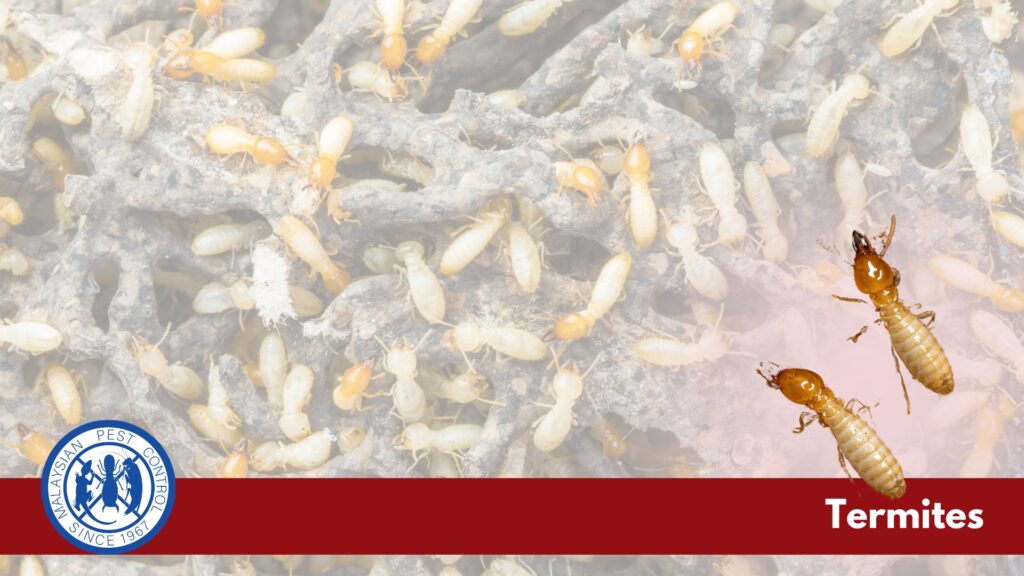
TERMITES Termites — known locally as anai-anai — silent destroyers of wooden structures
Common Misconception

Not “white ants.” Closer to cockroaches.

Termites are often nicknamed “white ants” — but biologically, they’re nothing of the sort. Modern entomology classifies termites within the cockroach order (Blattodea). The visual resemblance to ants is convergent evolution; the genetic family tree tells a different story.

Of the ~2,600 termite species worldwide, only a small percentage are pests to humans. The rest play vital ecological roles — breaking down dead wood, recycling nutrients, and supporting forest ecosystems. The few species that target our homes, however, do enormous damage.

生物学とライフサイクル

Three stages of termite development.

Termites pass through three distinct stages on their way to adult roles — and a queen can keep producing eggs for decades.

ステージ01

Hatches in a few weeks

Termite queens lay eggs continuously, attended to by worker termites. The number of eggs varies enormously — from hundreds to many thousands daily depending on species and colony size.

ステージ02

Larvae

Months to a year+

Larvae undergo several molts and develop into one of the three castes — worker, soldier, or reproductive — depending on the colony’s needs and environmental cues.

ステージ03

アダルト

Workers/soldiers 1–2 yrs · Queen decades

Adult termites take on permanent roles within the colony. While workers and soldiers live 1–2 years, a termite queen under optimal conditions can live for decades — laying eggs continuously throughout.

The Caste System

Three roles, one colony.

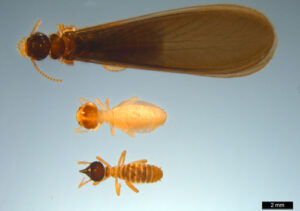
Termite societies are highly specialised. Each member is born into a role and develops the body and behaviour suited to that purpose — workers, soldiers, or reproductives.

Caste 01

労働者

The colony’s labour force — making up the majority of any termite society. Workers feed all other members, maintain the nest, care for the eggs, and do the wood-eating you see as damage.

Traits Wingless · Sterile · Most numerous · Active 24/7
Caste 02

兵士

Defenders of the colony — armed with large mandibles to fight off ant invasions and other threats. Despite their weaponry, soldiers cannot feed themselves and rely entirely on workers.

Traits Large mandibles · Can’t feed alone · Defensive role
Caste 03

生殖動物(羽アリ)

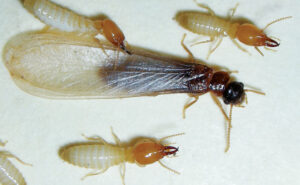
Winged termites that leave the colony during swarming season to mate and start new colonies. After mating, they shed their wings and become the king and queen of new generations.

Traits Winged (briefly) · Mate during swarming · Become future kings/queens
The Cellulose Mystery

How termites actually digest wood.

Wood is mostly cellulose — a tough plant fibre that almost no animal can break down on its own. Termites can only digest it because of a remarkable evolutionary partnership.

Inside every termite gut live symbiotic protozoa and bacteria that produce enzymes capable of breaking cellulose into nutrients. The termite hosts the microbes; the microbes do the chemistry. Without these gut symbionts, termites would starve in front of an entire forest.

It’s also why young termites must be fed by older nestmates — they need to inherit the gut microbes through trophallaxis (mouth-to-mouth feeding) before they can digest wood themselves.

~2,600
Termite species worldwide
Only a fraction are pests — most are forest decomposers.
100%
Cellulose-based diet
Wood, paper, cardboard, dead plants — anything containing cellulose.
Queen egg production
Some species lay continuously for decades — 30,000+ eggs per day in mature colonies.
Common Species

Six termite species found in our region.

Different termite species behave differently — some live underground, others inside wood, others build elaborate above-ground structures. Identifying the species is the first step to effective treatment.

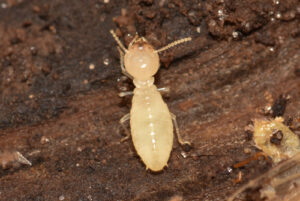
Subterranean termites — the most economically destructive species in Malaysia
Species 01
Subterranean Termites

Build colonies underground. Most economically destructive species in Malaysia. Highly dependent on soil moisture.

Creamy white to dark brown/black
サイズ
~10 mm
Body
長くて細い楕円形
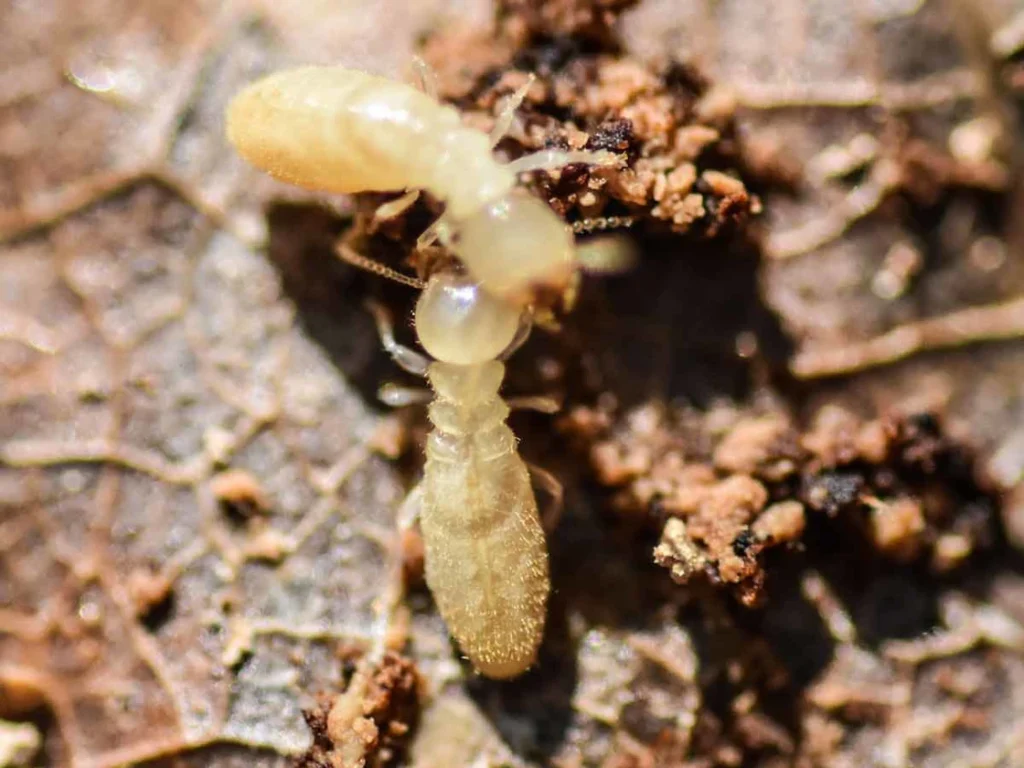
Dampwood termites — larger species that infest moisture-rich wood
Species 02
Dampwood Termites

Larger termites that target wood with high moisture content — rotting timber, water-damaged structures, decaying logs.

クリーム色から茶色がかった
サイズ
12 – 16 mm
Body
長くて細い楕円形
Drywood termites — soldier and worker castes shown in a piece of dry wood
Species 03
Drywood Termites

Live entirely within the wood they consume — no soil contact required. Often found in furniture, hardwood floors, and roof timber.

クリーム色から茶色がかった
サイズ
10 – 25 mm
Body
長くて細い楕円形
MOST DESTRUCTIVE Formosan termite worker — Coptotermes formosanus, the most destructive termite species globally
Species 04
イエシロアリ

イエシロアリ — known as the most destructive termite worldwide. Forms huge aggressive colonies; thrives in warm tropical climates.

Creamy white to brownish-yellow
サイズ
12 – 15 mm
Body
長くて細い楕円形
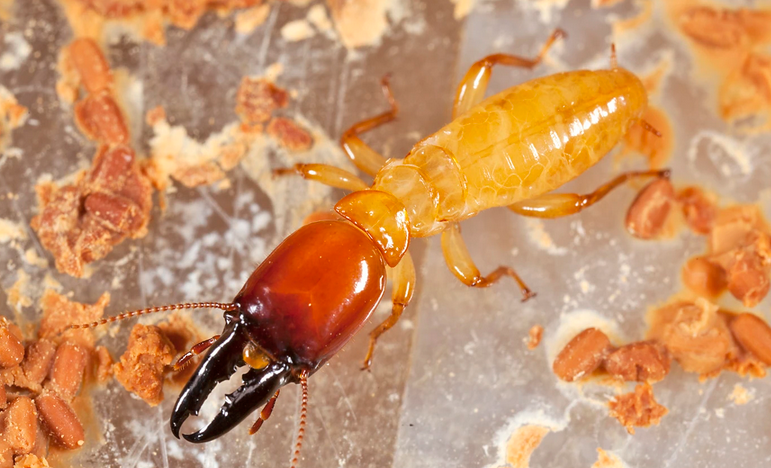
Conehead termites — distinctive cone-shaped head, build above-ground nests
Species 05
コーンヘッドシロアリ

Distinctive cone-shaped soldier head. Unlike most termites, they build visible above-ground nests and can forage in the open.

ダークブラウンから黒
サイズ
6 – 15 mm
Body
Oblong, distinctive head
Asian subterranean termite — common Coptotermes species in Malaysia
Species 06
アジアの地下

Common in Malaysia. Builds underground colonies and travels through mud tubes to reach above-ground food sources. Highly active in warm tropical conditions.

クリーム色から茶色がかった
サイズ
6 – 12 mm
Body
長くて細い楕円形
The Worst Offenders
Genus Coptotermes · Family Rhinotermitidae

The genus that causes most of the damage.

コプトテルメス is one of the most economically significant termite genera worldwide. Multiple species in this genus are notorious for causing extensive damage to buildings, crops, and forested areas — adapting to a wide variety of habitats and consuming wood aggressively.

The most destructive single species is イエシロアリ — the Formosan termite. It builds massive colonies (up to several million members), feeds aggressively, and thrives in warm tropical climates. It’s the most damaging termite species globally.

Most コプトテルメス species build underground colonies, creating intricate tunnel systems that let them access wood above ground while staying hidden from human detection — sometimes for years before damage becomes visible.

Economic Impact

Why termites cost so much.

Termites are responsible for billions of dollars in damage every year worldwide. The cost goes well beyond the bugs themselves.

Cost 01

構造的損傷

Wooden building components, support beams, roofing timber, flooring, doorframes — termites silently consume them for years before damage is visible.

Cost 02

Furniture & fittings

Hardwood furniture, cabinets, picture frames, books — anything cellulose-based becomes a potential target. Heritage and antique items are particularly vulnerable.

Cost 03

Treatment & repair

Beyond the damage itself, prevention and remediation costs include chemical soil treatments, baiting systems, structural repair, and ongoing monitoring.

害虫問題でお困りですか?

Suspect termites? We have a service for every situation.

Whether you’re seeing live termites in existing structures, building a new property and need preventive soil treatment, or trying to decide between baiting and barrier methods — we have a dedicated approach for each. Pick the one that matches your situation.

続きを読む

弊社のその他の記事 害虫百科事典。.

Other relevant articles — including the termite life cycle deep-dive and how to tell flying ants from termite swarmers.

ja日本語