Flying Ants or Termites? One damages your home. The other doesn’t.
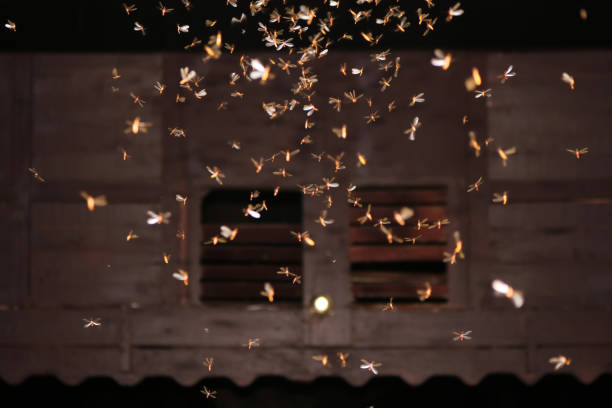
Saw a swarm of flying insects around your lights? Found piles of discarded wings on the floor the morning after rain? Here’s how to tell in 60 seconds — and what to do if it’s the worrying one.
Flying ants or termites — which one did you see?
The differences matter more than most homeowners realise. Here’s the honest breakdown.
Seeing flying insects swarming your house light and wonder what are they?
Flying ants and termites is crucial, yet challenging, given their similar appearances during their respective swarming seasons. For homeowners, the stakes are high; these insects are not only a nuisance but can also cause significant structural damage to buildings.
Misidentification can lead to ineffective pest control strategies, potentially costing time, money, and the integrity of your home. Understanding the differences between these pests is the first step in effective pest management.
The visual differences 一目了然。.
Three key differences you can spot with the naked eye — body shape, antennae, and wings. Save or share this reference for future identification.
The three markers every homeowner should know.
If you have a clear view of the insect — up close or in a good photograph — these three features settle the question.
身材
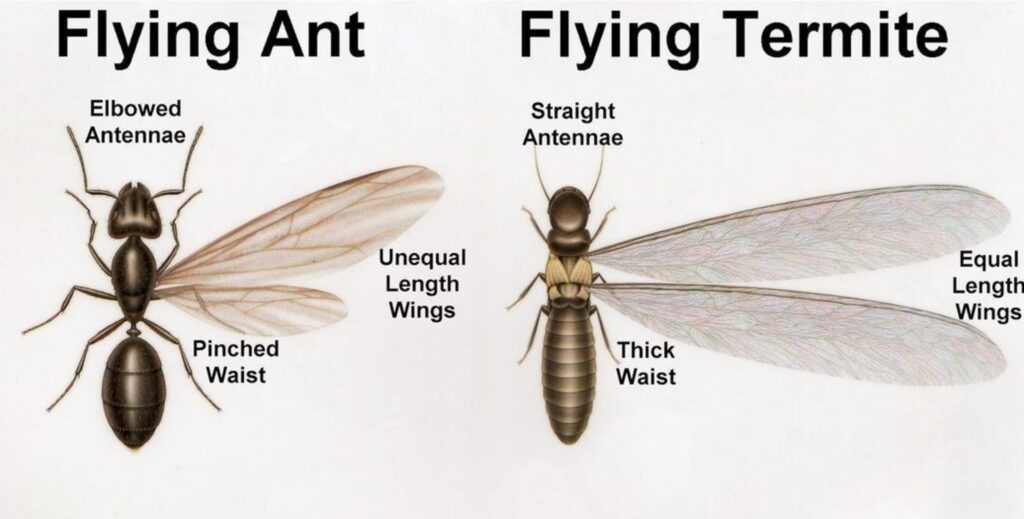
One of the 最显眼且最容易识别 飞蚁和白蚁的区别在于它们的体形。白蚁有厚厚的 直腰,使它们的身体轮廓更加统一。相比之下,飞蚁拥有明显 腰部收紧,将胸部和腹部明显分开,使它们呈现出沙漏状身材。
天线形状
The antennae of these insects also serve as a key identifying feature. Termites have relatively straight antennae that appear bead-like. Flying ants, on the other hand, have elbowed antennae that bend at an almost right angle, which can be easily seen when viewed up close.
翼尺寸
Both flying ants and termites have two pairs of wings, but the similarities end there. A termite’s wings are uniformly sized, and they often appear twice as long as their body. Flying ants display a significant difference in wing length; their front wings are noticeably larger than their hind wings, and when at rest, the wings do not lie flat but are angled away from the body.
The threat difference is enormous.
The presence of either flying ants or termites around a home can elicit concern, but the implications of an infestation can be vastly different.
Termites — Silent Destroyers
Known as silent destroyers, termites can cause extensive damage to wooden structures, often unnoticed until it is too late. Subterranean termites, the most destructive type, create mud tubes for moisture while they eat away at wood, which can compromise the structural integrity of buildings. Annual termite damage to buildings costs billions of dollars worldwide, highlighting the importance of early identification and intervention.
Flying Ants — Nuisance, Not Peril
While less destructive than termites, flying ants are not entirely harmless. They can invade homes in large numbers, especially during mating season, and can be particularly bothersome if they establish nests within the house. However, unlike termites, flying ants do not eat wood and therefore do not pose the same level of threat to the structure of buildings. Their presence is more of a nuisance than a peril, but it can signal larger ant issues in the area.
Termites don’t wait for you to notice them.
By the time you see swarmers, the colony is often 3–5 years old and already established beneath your home. Subterranean termites in Malaysia consume wood silently, 24 hours a day, working from the inside out — which is why so many homeowners only discover the damage when a doorframe crumbles or the flooring gives way.
Termite damage costs Malaysian property owners an estimated RM 20 million+ annually. Every week of delay after seeing swarmers is more wood eaten — and higher treatment costs later.
废弃的翅膀
Piles of small translucent wings on window sills, floor edges, or near light fixtures — especially after rain.
Mud tubes on walls
Pencil-thick brown tunnels running up walls, foundations, or beams. Termites use these to travel between soil and wood.
空心木材
Tap the doorframe, skirting board, or wooden beam — if it sounds hollow or the surface flakes easily, termites have been eating from within.
Seen any of these? A free inspection is the safest, cheapest first step. Our specialists will confirm whether it’s active termite activity, identify the species, and give you a clear treatment plan with honest pricing.
How we handle Malaysian termite problems.
Four treatment approaches matched to the stage of infestation and structure type. Every job starts with a free on-site inspection — no obligation, no pressure.
白蚁 检查
Not sure yet? Our specialists visit your premise, identify the species, map affected areas, and give you an honest treatment plan.
白蚁 Baiting Treatment
Bait stations installed around your property. Workers carry the bait back to the colony — eliminating the queen and stopping reproduction at the source.
Barrier / 钻孔处理
Chemical soil treatment around foundations — creating a barrier termites cannot cross. Suitable for buildings with active infestations or high risk exposure.
Preconstruction 土壤处理
New build or major renovation? Treat the soil before pouring concrete. The most cost-effective long-term termite defence for developers and homeowners.
马来西亚的 longest-serving termite treatment specialist.
Free inspection first. Honest quotation second.
WhatsApp us a photo of what you saw — flying insects, wings, mud tubes, or damaged wood. Our specialists will confirm whether it’s termites or flying ants, and if treatment is needed, provide a written quotation within 24 hours of the on-site visit.
更多信息 termites and ants.
If you found this useful, our other guides go deeper into termite biology, ant species, and other Malaysian household pests.