虫害  ›  About Fleas
虫害百科全书

Fleas: tiny jumpers, massive infestations.

Fleas are small, wingless insects with extraordinary jumping ability — and a parasitic life cycle that explodes once they reach a host. The cat flea (猫栉头鱼) is the most common species in Malaysian homes, affecting both pets and people. Most of the trouble isn’t what you see — it’s what’s hiding in your carpets and bedding.

Common Species
C. felis
Visible Adults
~5% of population
Hidden Stages
~95% (eggs/larvae/pupae)
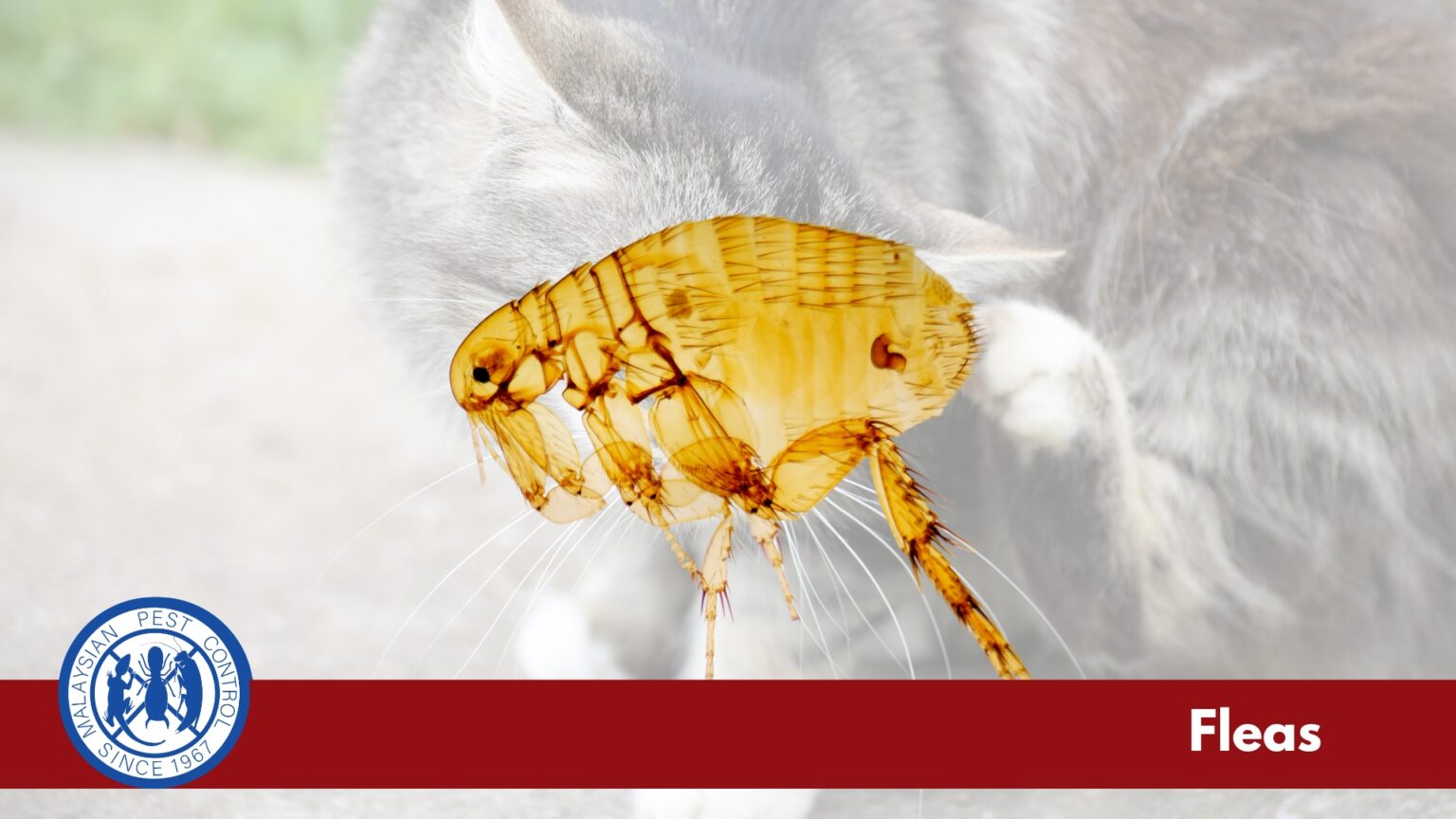
FLEA Flea close-up — Ctenocephalides felis, the cat flea, the most common species affecting Malaysian pets and homes
The 95% Iceberg

The fleas you see are only the beginning.

Of every 100 fleas in your home, only about 5 are visible adults jumping on your pet or biting your ankles. The other 95 are hidden in carpets, bedding, sofas, and cracks — eggs, larvae, and pupae waiting to emerge. This is why DIY treatment so often fails.

5%
Adults · Visible

What you actually see

Adult fleas on pets, jumping on furniture, biting ankles. The visible problem.

95%
Eggs / Larvae / Pupae · Hidden

What’s hiding everywhere else

Eggs in carpet fibres, larvae in skirting cracks, pupae in upholstery. The real infestation.

生物学与生命周期

Four stages, most of them invisible.

Fleas pass through four life stages — and three of those four happen off the host, in your home environment. Treating only the pet leaves the rest untouched, which is why infestations rebound.

第一阶段

2 – 14 days to hatch

Laid on the host but fall off into the environment — carpet, bedding, sofa cushions. Tiny, white, easily missed.

第二阶段

幼虫

5 – 20 days

Worm-like, blind. Feed on organic debris and adult flea faeces. Burrow deep into carpet fibres and skirting cracks.

第三阶段

(cocoon)

Days to weeks (or months)

Spin protective cocoons. Highly resistant to insecticides while inside — can wait dormant for ideal conditions.

第四阶段

成人

Lives weeks – months

Emerges when detecting host via vibrations, heat, and CO₂. Jumps onto host to feed and mate. Females lay eggs within days.

50
Eggs per day · per female

One adult female flea can lay 500+ eggs in her lifetime.

Within 24–48 hours of her first blood meal, a female cat flea begins laying eggs at a rate of around 50 per day. Across her several-week lifespan, that’s 500 or more eggs — most falling off the host into your carpets, bedding, and furniture.

This is why a “small flea problem” becomes a full infestation in weeks. Each visible adult on your pet represents dozens to hundreds of eggs already deposited around your home.

The Main Offender

Despite the name — “cat fleas” attack everything.

Of the many flea species worldwide, one dominates Malaysian homes — and despite its name, it doesn’t limit itself to cats.

Most Common Species
猫栉头鱼

The cat flea — not just a cat problem.

Despite the name, the cat flea is the most common flea on dogs as well, and the species most likely to bite humans in Malaysian homes. It’s responsible for the vast majority of flea problems we see — whether you have a cat, a dog, or no pets at all (fleas can hitchhike in via rats, neighbouring properties, or second-hand furniture).

Cat fleas are about 1–3 mm long, dark brown to black, flattened side-to-side (so they slip easily through fur), and capable of jumping over 100 times their body length. They’re built to find and stay on warm-blooded hosts.

Why The Bites Itch

The biology of that maddening itch.

Flea bites itch because of saliva chemistry — and for some people, an immune over-reaction makes the itch dramatically worse.

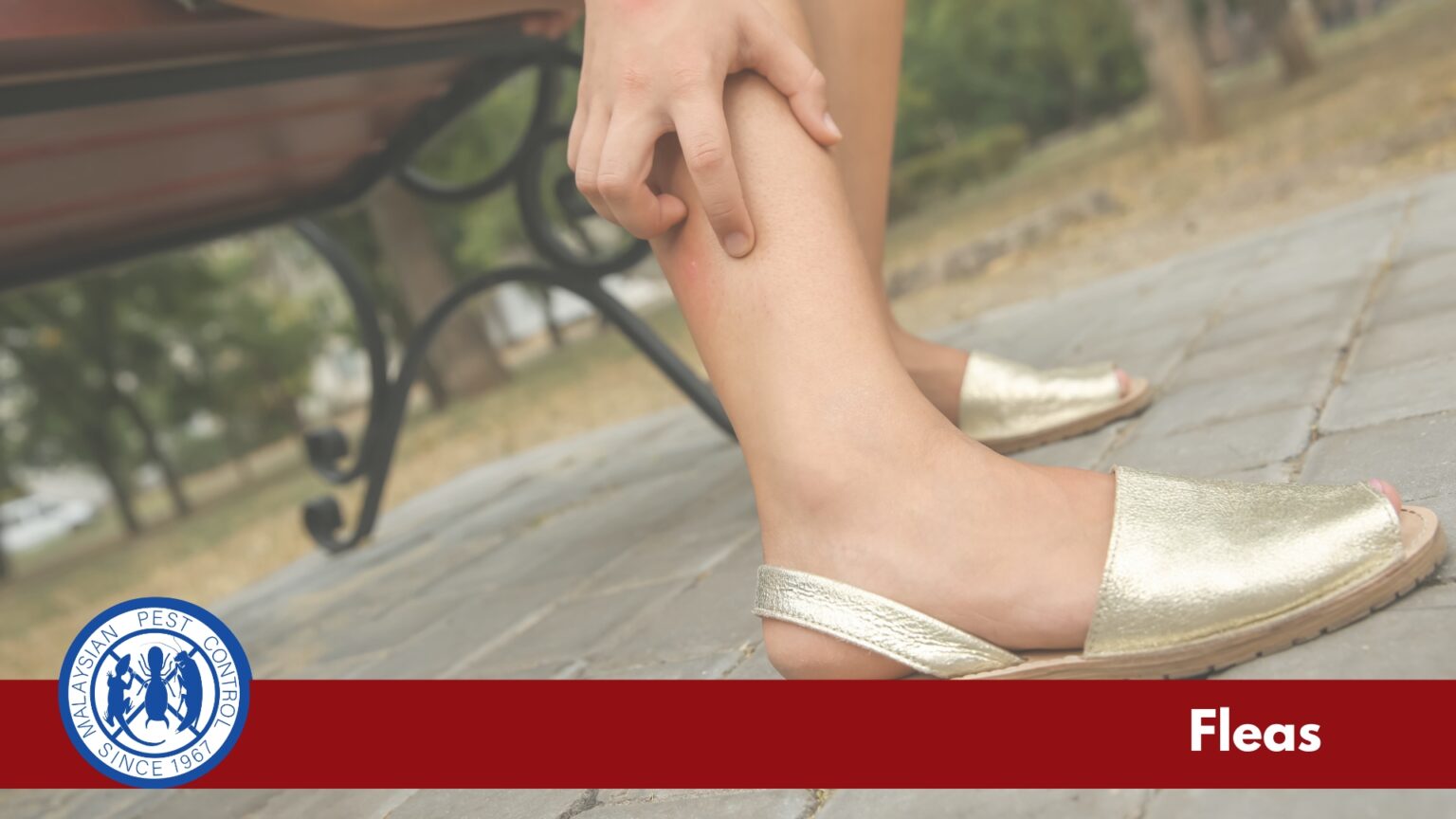
FLEA BITES Person scratching leg from flea bites — characteristic itchy red bumps

Saliva is the real culprit.

When fleas bite, they inject saliva into the skin to prevent blood from clotting while they feed. Your immune system reacts to that saliva as an allergen, releasing histamines that cause the redness, swelling, and intense itching around the bite site.

The reaction usually appears within minutes and can persist for several days, especially if the bites are scratched. Bites tend to cluster around the ankles, lower legs, and any skin in contact with carpeting or pet bedding.

FAD
Flea Allergy Dermatitis

Some people and pets are highly sensitive to flea saliva and develop FAD — extreme itching, redness, and swelling far more severe than typical bites. In pets, it’s a leading cause of skin problems and excessive scratching.

Disease Vectors

What fleas can actually transmit.

Fleas are vectors for several pathogens affecting both humans and animals. Most are uncommon today thanks to modern public health, but they remain real risks worth knowing.

Plague
Historical / rare today

Caused by Yersinia pestis, transmitted via rat fleas. Historically devastating; now uncommon thanks to modern medicine, but still present in some regions.

Murine Typhus
Active in SE Asia

Bacterial infection transmitted by rat fleas. Causes fever, headache, rash. Reported in Malaysia and across SE Asia.

Tapeworms
Pets & sometimes humans

Pets ingest fleas while grooming and can become infected with Dipylidium caninum tapeworms. Children may also be at risk.

Allergic Reactions
FAD in pets and humans

Flea allergy dermatitis is the most common skin problem in pets. Severe scratching can lead to bacterial infections and hair loss.

Managing Bite Itchiness

Five ways to calm the itch.

While treating the infestation is the only lasting solution, these steps help manage the itch and prevent secondary infections in the meantime.

01

Avoid scratching

Keep nails short, cover bites if needed. Scratching introduces bacteria and worsens the itch.

02

Topical treatments

Hydrocortisone cream or calamine lotion helps reduce itching and inflammation.

03

Antihistamines

Oral antihistamines reduce the allergic response and overall itchiness.

04

Cold compresses

Cool, damp cloth applied to bite sites soothes inflammation and reduces the urge to scratch.

05

Seek medical help

For severe allergic reactions or signs of infection (impetigo, cellulitis), see a doctor. Antibiotics may be needed.

The Two-Front Approach

Treating the pet alone doesn’t end the infestation.

Because 95% of the flea population is in your home environment, not on your pet, treating only the pet leaves an active infestation behind. Within days or weeks, new adults emerge from pupae in carpets and re-attach to the pet — and the cycle restarts.

Effective flea control requires both the pet and the home to be treated together. Your vet handles the pet; we handle the environment.

Vet’s role
Treat the pet

Spot-on treatments, oral medications, flea collars. Kills adults on the host and prevents new attachments.

Our role
Treat the home

Targeted application to carpets, bedding, skirting, sofas, pet sleeping zones. Eliminates eggs, larvae, and pupae.

遇到虫害问题了吗?

Fleas in your home — let’s clear the hidden 95%.

If you’re seeing fleas on your pet or finding bites on your ankles, the eggs and larvae are already in your carpets and furniture. Our flea control programme targets all four life stages across the home environment, working alongside your vet’s pet treatment for full elimination.

继续阅读

更多精彩内容尽在我们的 害虫百科全书。.

Other common pests you may encounter alongside fleas — particularly rats, who often introduce flea populations to homes.

zh_CN简体中文