Bugs & Pests  ›  About Rats
虫害百科全书

Rats: intelligent, adaptable, and reproducing fast.

Rats are medium-sized, long-tailed rodents from the genus 家鼠. Two species cause the bulk of our problems in Malaysia — and once they’re inside, they multiply rapidly and bring real disease risks with them.

家鼠
Sexual Maturity
~5 weeks
Lifespan (wild)
~1 year
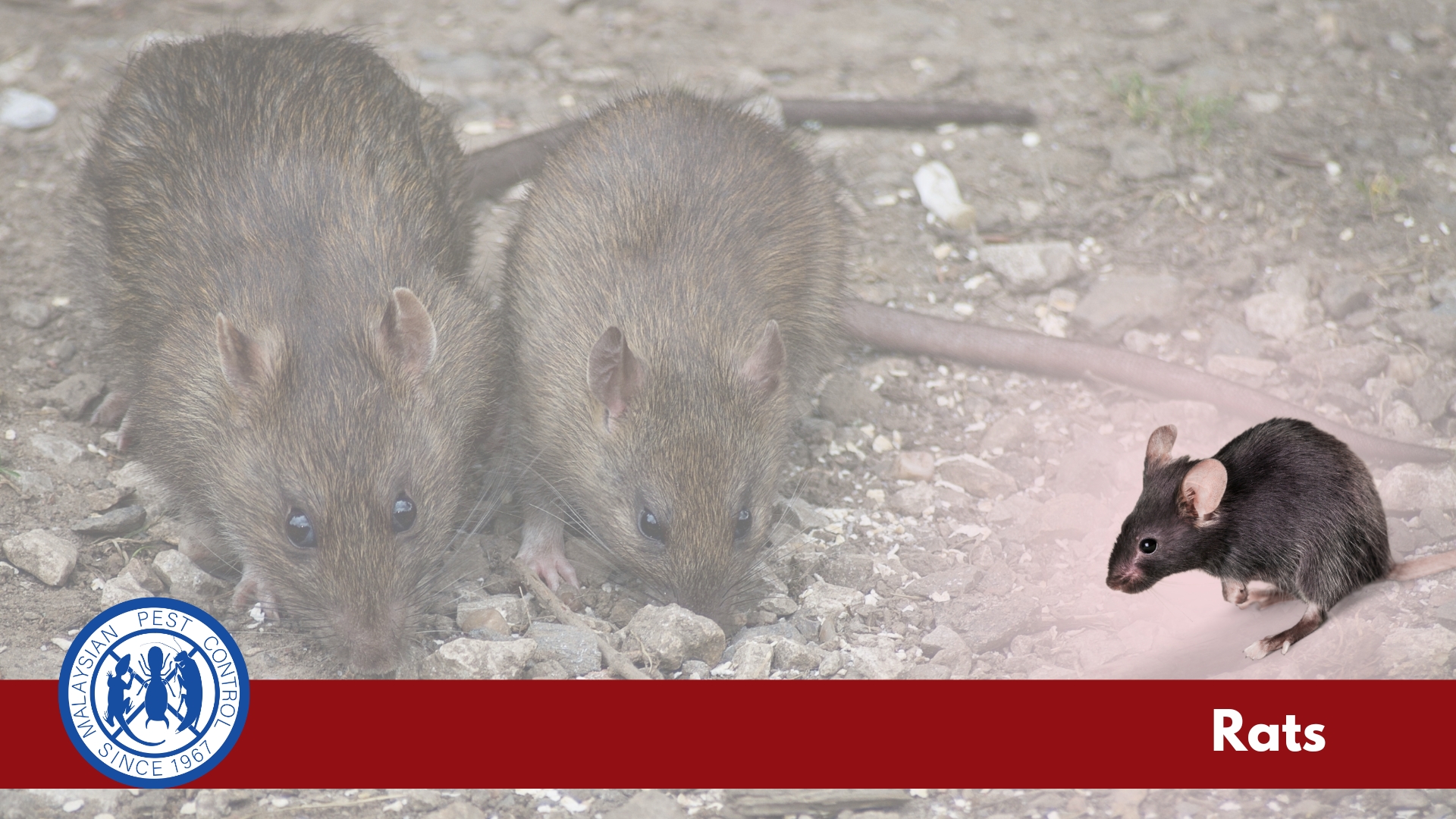
RATS Rat — Rattus species, common rodent pest in Malaysian homes and premises
The Two Common Species

Norway Rat or Roof Rat?

Most rat problems in Malaysian premises come down to one of two species. They look similar but behave differently — and identifying which you’re dealing with helps determine the right control approach.

褐家鼠
Norway Rat
Also: Brown rat, sewer rat, common rat

The larger, heavier, and more aggressive of the two. Excellent burrowers — they prefer ground level and below.

身材
Stocky, heavy build
Tail Length
Shorter than body
Preferred Habitat
Ground level — sewers, drains, basements, garbage areas
Common Signs
Burrows in soil, droppings near food sources, gnaw marks at floor level
家鼠
Roof Rat
Also: Black rat, ship rat, house rat

Smaller and more agile. Prefers to live above ground — climbs walls, runs along beams, nests in roof spaces.

身材
Slender, lighter build
Tail Length
Longer than body
Preferred Habitat
Above ground — roof spaces, ceiling cavities, false ceilings, trees
Common Signs
Scratching sounds in ceilings, droppings in roof voids, chewed wires
The Reproduction Reality

One pair of rats can become 800+ in a single year.

This isn’t theoretical. With sexual maturity at just 5 weeks, up to 5 litters per year, and 6–12 pups per litter, rat populations explode under favourable conditions. Here’s the math.

Generation 1 · Original Pair
2
A single male and female rat enter your premise.
First Year · Their Offspring
40
5 litters × 8 pups per litter from the original pair alone.
When Their Daughters Breed
800+
20 daughters × 40 pups each = exponential growth.
Calculation assumptions
  • Sexual maturity at ~5 weeks of age
  • 5 litters per year per female
  • 8 pups per litter (conservative)
  • ~50% of pups are female
  • Daughters begin breeding immediately
  • Favourable conditions (food, shelter, water)
Health & Disease

Diseases rats actually carry.

Rats are vectors for serious diseases that affect humans and pets. They spread these through their urine, faeces, saliva, and the fleas and parasites they carry.

钩端螺旋体病
Spread via rat urine

Bacterial infection contracted from contact with water or soil contaminated by rat urine. Causes high fever, kidney damage, and in severe cases, death.

Hantavirus
Inhaled from droppings

Severe respiratory disease contracted by inhaling dust contaminated with rat droppings or urine. Causes hantavirus pulmonary syndrome — potentially fatal.

Bubonic Plague
Via rat fleas

Historically the cause of the Black Death. Rats host the fleas that transmit the bacteria Yersinia pestis to humans. Still occurs occasionally worldwide.

Salmonella
Food contamination

Rats walking across food preparation surfaces or stored foods contaminate them with bacteria from drains, sewers, and waste — causing food poisoning.

Property Damage

Rats destroy more than food.

Rats have continuously growing teeth, which means they need to chew constantly to keep them filed down. The damage extends well beyond your pantry.

Chewed wires & fire risk

Rats chew through electrical wiring, exposing live conductors. This is a leading cause of unexplained electrical fires in properties with rodent infestations.

Structural damage

They chew through wood, plastic, drywall, and even soft metals. Burrows undermine foundations; gnawing damages doors, skirting, insulation, and stored items.

Food contamination

Rats contaminate vastly more food than they actually consume — through droppings, urine, hair, and bacteria from their bodies. A food safety nightmare in any commercial premise.

Behaviour & Habitat

How rats actually live.

Understanding rat behaviour helps with prevention. They’re not random — their movements are predictable, and their needs are limited.

  • Highly social Live in complex hierarchical groups within burrows or nests. Communicate via sounds and scent marking.
  • Omnivorous & opportunistic Will eat virtually anything — grains, fruits, meats, garbage, pet food, soap, even leather and paper.
  • Travel for food Will travel considerable distances nightly to known food sources. Often follow predictable routes along walls.
  • Adaptable to any environment Found everywhere from rural farms to high-rise buildings. They need only food, water, and shelter to thrive.
Watch · Rat Behaviour

老鼠 in their environment.

The best way to understand a pest is to watch it. This video shows rats behaving as they naturally would — moving along edges, climbing, foraging, and reacting to surroundings.

Look out for the way they follow walls and edges rather than crossing open ground (a key signal for technicians placing traps), and how confidently they explore once they feel a space is safe — important for understanding why infestations escalate so quickly once the first rats arrive.

遇到虫害问题了吗?

Rats in your home or premise — let’s deal with them.

Given how fast rat populations grow, there’s no value in waiting. If you’re seeing droppings, hearing scratching in ceilings, finding chewed wires or food, or just spotted one in your kitchen — book a free inspection. Our rat control service has been protecting Malaysian homes and businesses since 1967.

继续阅读

More from our pest encyclopaedia.

Other common pests in Malaysian homes and premises — many of them often appear alongside rats.

zh_CN简体中文