虫害  ›  关于蚂蚁  ›  About Honeypot Ants
Curiosity of Nature · Not a Malaysian Pest

Honeypot Ants — the living honey jars of the desert.

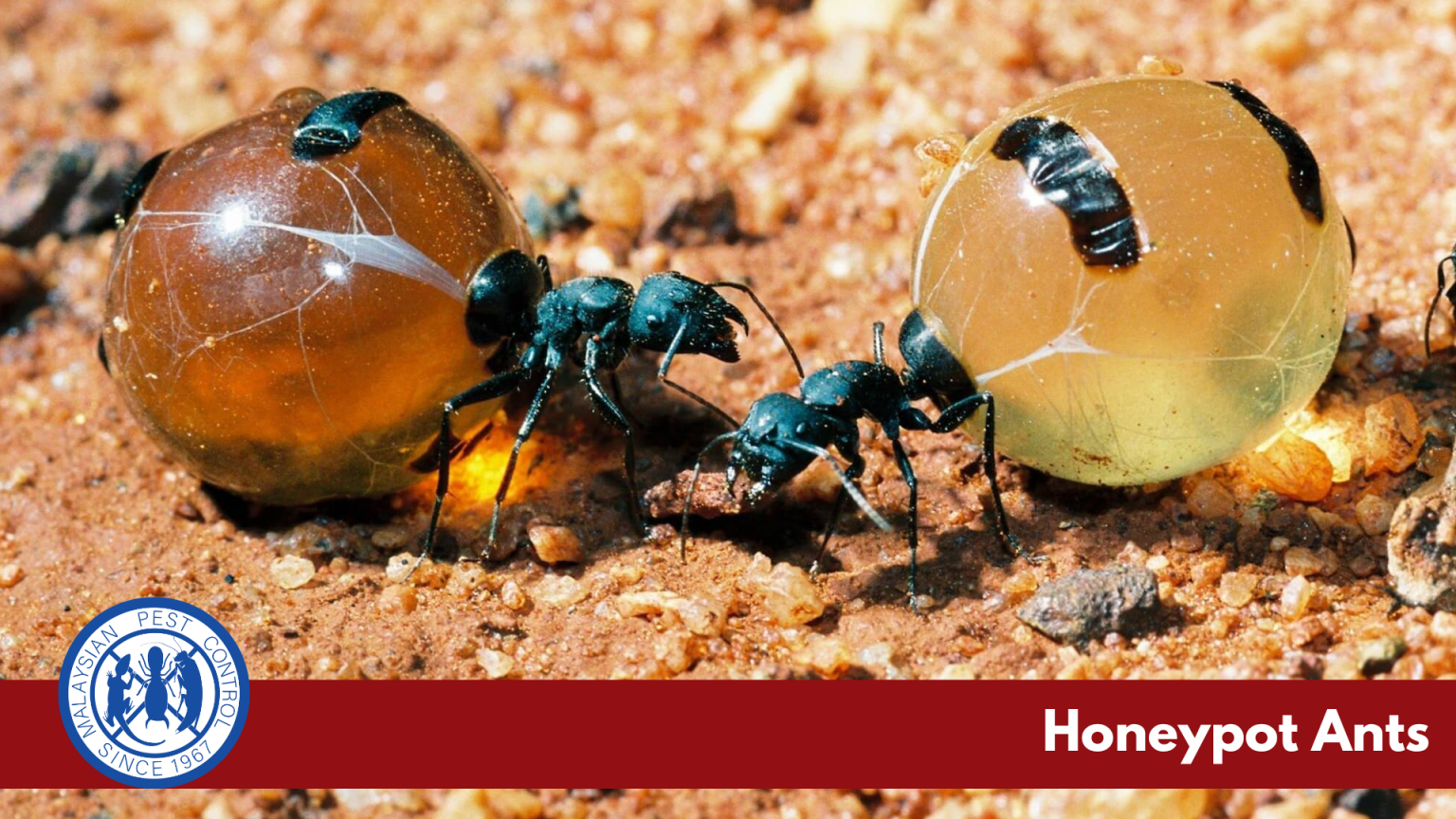
One of the most extraordinary adaptations in the entire insect world. Certain worker ants — called repletes — become living food reservoirs, storing nectar in their swollen abdomens until they resemble tiny grapes filled with liquid gold.

物种
蚁囊属 spp.
Native to
Desert regions · not Malaysia
Threat level
Harmless · non-aggressive
HONEYPOT ANT · MYRMECOCYSTUS Honeypot ant with swollen abdomen — Myrmecocystus species from desert regions
蜜罐蚁简介

A remarkable evolutionary food storage system.

What makes honeypot ants one of the most fascinating insects on Earth.

Honeypot ants (蚁囊属 spp.) are famous for their unique ability to store food in the swollen abdomens of specialized worker ants, known as “repletes.” Found in arid regions like deserts, these ants provide crucial food storage for their colonies during times of scarcity.

The Living Grape Adaptation

Some worker ants become walking honey jars.

“Certain worker ants, called ‘repletes,’ store nectar and other liquids in their swollen abdomens, which can expand to the size of a grape.”
生物学与生命周期

四个阶段 honeypot ant development.

Like most ant species, honeypot ants undergo complete metamorphosis — a process that transforms egg to adult through four distinct stages.

第一阶段

蛋阶段

queen lays eggs in the nest.

第二阶段

幼虫阶段

Larvae are fed by workers and develop over a few weeks.

第三阶段

蛹期

幼虫 spin cocoons 在成年之前。.

第四阶段

成人阶段

Workers gather food, while the queen reproduces.

Behavior & Habitat

Life in the arid extremes.

Where honeypot ants live, and how they’ve evolved to survive there.

Honeypot ants primarily inhabit desert regions. Their repletes store liquid food, which sustains the colony during droughts. Foraging ants seek out nectar, insects, and honeydew.

与人类和宠物的互动

A curiosity, not a threat.

Unlike many ant species, honeypot ants are peaceful residents of their arid ecosystems.

Honeypot ants rarely pose a threat to humans or pets. They are primarily non-aggressive and are more a curiosity than a pest. Their food storage adaptation is a fascinating feature in ant biology.

某些工蚁被称为“repletes”,它们将花蜜和其他液体储存在肿胀的腹部中,腹部可以膨胀到葡萄大小。
蜜罐蚂蚁的独特之处

Living food reservoirs — a rare evolutionary trait.

Why this species stands out even among the enormous diversity of ants.

Honeypot ants are special because of their unique food storage ability. Certain worker ants, called “repletes,” store nectar and other liquids in their swollen abdomens, which can expand to the size of a grape. This adaptation allows the colony to survive during times of food scarcity, especially in arid environments. Their ability to function as living food reservoirs is a rare and remarkable evolutionary trait, making them an interesting subject of study in both ecology and biology.

Watch · Gordon Ramsay Tries Honeypot Ants

Yes — people actually eat them.

Celebrity chef Gordon Ramsay experiences the “living honey jar” for the first time. A viral moment that introduced honeypot ants to millions.

Gordon Ramsay pops honey inside his mouth · Traditional Indigenous Australian bush tucker
Important · Malaysian Context

You won’t find honeypot ants in your Malaysian home.

Honeypot ants are not native to South East Asia. You won’t see them anywhere near your house in Malaysia, unless they are imported as pets from countries in North America or Australia.

Seeing ants at home in Malaysia? They’re not honeypot ants — but we have a full identification guide for the species you likely have.
About Malaysian ants →
Malaysian Ant Specialists

Whatever the ant species — we know the Malaysian ones.

59岁 of ant expertise
1,000+ 服务客户
ISO 9001 认证
自1967年以来
zh_CN简体中文