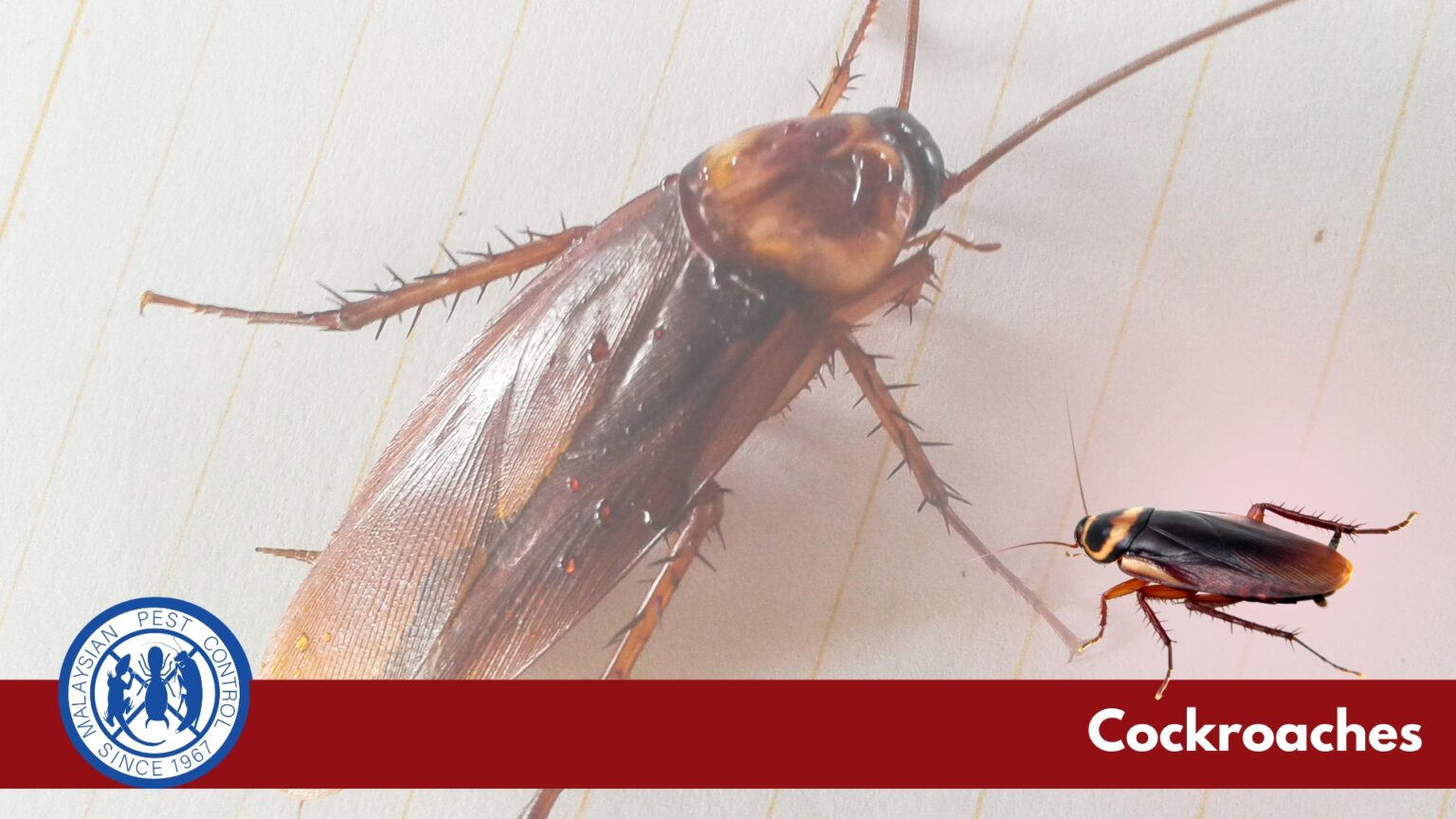
Cockroaches: tough, fast, and reproducing relentlessly.
Cockroaches belong to the order Blattodea — the same order as termites. Out of around 4,600 species worldwide, only about 30 cause problems for humans — but those 30 are exceptionally good at it. They spread disease, trigger asthma, and reproduce at a rate that makes them genuinely difficult to eliminate.
Most cockroaches are harmless. The pest few are not.
The headlines on cockroaches focus on the worst offenders, but the picture is more nuanced. Most species play roles in forest ecosystems — only a small fraction adapt to live alongside humans.
Cockroach species worldwide
The vast majority live in forests and natural environments — important decomposers in their ecosystems.
Adapted to human habitats
Only this small fraction have evolved to live in our kitchens, bathrooms, and basements — and they cause virtually all the problems.
Identifying what you’re dealing with.
Three cockroach species cause the bulk of our problems in Malaysian homes and businesses. Each behaves differently, prefers different environments, and may need different control strategies.
The most widespread urban species. Small, light brown, with two dark stripes behind the head. Reproduces faster than any other pest cockroach — a single female can produce hundreds of descendants in months.
The largest common cockroach — reddish-brown and capable of flight in warm weather. Often associated with sewers, drains, and basements. Frequently enters homes through plumbing.
Dark brown to black, glossy. Slower-moving than other species and prefers cooler, damper environments. Often called the “water bug” because of its strong association with moisture.
One female German cockroach can produce 30,000+ descendants in a year.
This is why cockroach infestations escalate so quickly. Each ootheca holds 30–40 eggs, females produce multiple oothecae across their lifetime, and offspring mature within months — restarting the cycle. Here’s the math.
- German cockroach as the model species
- 5+ oothecae per female lifetime
- 30–40 eggs per ootheca
- ~50% offspring are female
- Females mature in 6 weeks – 6 months
- Favourable conditions (food, water, warmth)
The three stages of cockroach development.
Cockroaches undergo incomplete metamorphosis, passing through three distinct stages. Understanding the timing helps explain why DIY treatments often fall short — eggs in oothecae are largely protected from sprays.
卵 (ootheca)
~28 – 30 days to hatchCockroach eggs are enclosed in a hard capsule called an ootheca. Each ootheca contains up to 30–40 eggs in German cockroach species. The capsule is protective — most household sprays don’t penetrate it.
ニンフ
6 weeks – 6 months · 6–7 moltsHatchlings emerge as wingless miniature versions of adults. They go through 6–7 molts, shedding their exoskeletons each time. Duration varies dramatically between species and conditions.
アダルト
Lives up to 1 yearAfter the final molt, adults emerge — often winged. Not all species can fly. Adults reproduce immediately, producing several generations per year under good conditions.
How cockroaches 実際に生きている。.
Cockroaches are nocturnal scavengers — secretive, fast, and remarkably adapted to squeeze into tight spaces. Knowing their habits helps you find them and prevent them returning.
-
Nocturnal & secretive Active at night when humans aren’t around. If you see one during the day, the population is likely large or under stress.
-
ほとんど何でも食べられる Food waste, paper, glue, soap, leather, hair — they scavenge whatever organic material they find. Crumbs and grease are favourites.
-
Flat bodies for tiny gaps Their flattened profile lets them squeeze through cracks as thin as a coin’s edge — into wall cavities, behind cabinets, under appliances.
The diseases and allergies they actually spread.
Cockroaches aren’t just unpleasant — they’re a genuine public health concern. They carry pathogens on their bodies and in their droppings, and trigger respiratory issues that affect children especially.
Cockroaches walking across food preparation areas spread salmonella bacteria. Causes severe gastrointestinal illness — fever, diarrhoea, vomiting.
Spread via contact with cockroach-contaminated surfaces. Can cause skin infections and food poisoning, particularly in compromised immune systems.
Carried in cockroach faeces and on their bodies. Causes severe food poisoning with abdominal cramps, diarrhoea, and dehydration.
Their droppings, skin sheddings, and saliva are major asthma triggers, particularly affecting children.
Read about pests & asthma →
Cockroaches in your home or business — let’s fix it properly.
Given how fast cockroach populations grow, there’s no value in waiting. If you’re seeing them during the day, finding droppings, smelling that distinctive musky odour, or noticing nymphs in cabinets — book an inspection. Our cockroach control programme handles all life stages including the protected eggs, ensuring lasting elimination.
弊社のその他の記事 害虫百科事典。.
Other common pests you may encounter alongside cockroaches in Malaysian homes and premises.