虫害  ›  关于蚂蚁  ›  About Fire Ants
虫害百科全书

Fire ants: aggressive, dangerous, and invasive.

Red Imported Fire Ants (红火蚁) are small reddish-brown ants native to South America, now invasive across Malaysia and much of the world. They sting aggressively, build mounded nests in soil, damage electrical equipment, and pose a real public health risk — especially to anyone allergic to their venom.

Invasive species Aggressive sting Anaphylaxis risk
Species
S. invicta
Origin
South America
Queen Lifespan
6 – 7 years
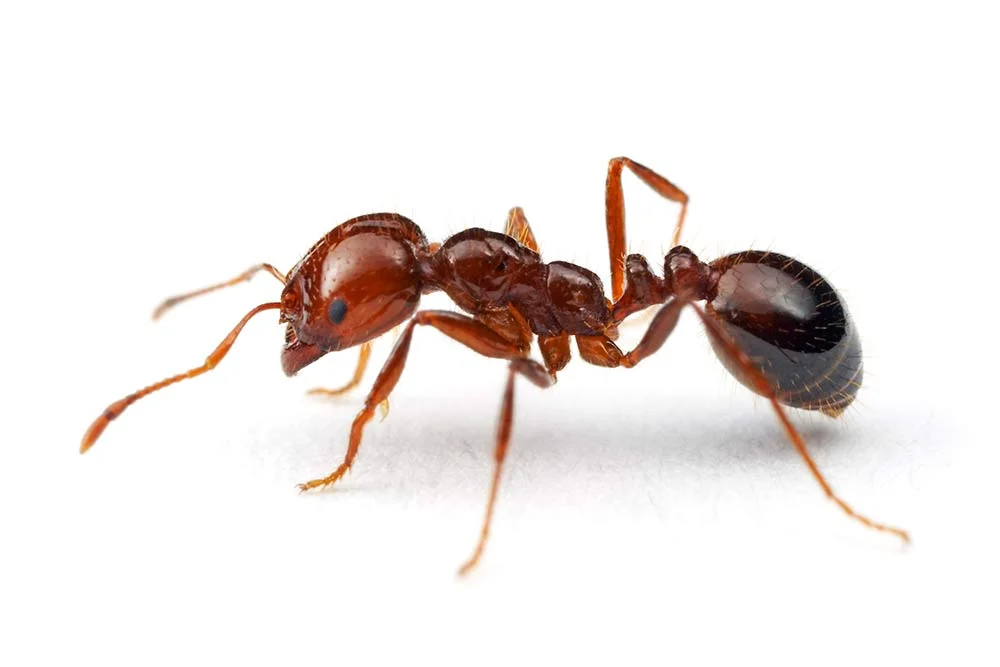
FIRE ANTS Red Imported Fire Ants (Solenopsis invicta) — reddish-brown invasive ants known for aggressive stinging behaviour
The Sting Reality

Their name is not metaphorical.

Fire ant venom contains alkaloid compounds that cause an immediate burning sensation — like being touched with a flame. Within 24 hours, sting sites typically develop into white fluid-filled pustules that can persist for days and are vulnerable to secondary infection if scratched.

For most people, stings are extremely painful but not dangerous. For those with venom allergies, severe systemic reactions including anaphylaxis are possible — and can be life-threatening. Anyone with a known insect-venom allergy should treat fire ant encounters as a medical emergency.

鉴别

How to recognise fire ants and their nests.

Fire ants don’t look dramatically different from many other ant species — but their nests are distinctive, and their behaviour when disturbed is unmistakable.

Species Profile
红火蚁

Red Imported Fire Ant — small but unmistakable when disturbed.

Fire ants are small (2–6 mm), reddish-brown, with a darker abdomen. The most reliable identification isn’t the ant itself but the mound — a loose, dome-shaped pile of soil with no central entrance hole. When the mound is disturbed, hundreds of ants emerge rapidly and aggressively, climbing onto whatever disturbed them.

尺寸
2 – 6 mm (workers vary)
颜色
Reddish-brown, darker abdomen
Nest
Dome-shaped soil mound, no obvious entry
行为
Mass aggressive response when disturbed
饮食
Omnivorous — plants, insects, small animals
栖息地
Open ground — lawns, fields, gardens
The Sting Mechanism

How fire ants attack — differently from other ants.

Most ants bite or sting. Fire ants do both, in a specific sequence that explains why their attacks are so painful and produce multiple sting sites from a single ant.

01

Bite to grip

The ant clamps onto skin with its mandibles — this is a bite, used purely for anchoring.

02

Pivot & sting

Using the bite as an anchor, the ant arches its abdomen and injects venom through its rear stinger.

03

Sting again

Unlike bees, fire ants sting repeatedly from a single bite anchor — creating a circular pattern of pustules.

A single fire ant typically delivers 3 to 7 stings from one bite location. With hundreds of ants attacking en masse, victims can sustain dozens to hundreds of stings in seconds — which is why fire ant encounters are so consistently traumatic.

生物学与生命周期

Four stages — and a queen that lives for years.

Fire ants undergo complete metamorphosis. The lifecycle is quick (under 6 weeks egg to adult) and the queen continues laying for years, allowing colonies to grow rapidly.

第一阶段

7 – 10 days

The queen lays eggs continuously in the underground nest. Hatching speed depends on temperature and conditions inside the nest.

第二阶段

幼虫

10 – 14 days

Fed and tended by workers. Diet during this stage determines caste — worker, soldier, or future queen.

第三阶段

9 – 16 days

White or tan in colour. Unlike many ants, fire ants don’t spin cocoons — the pupae are exposed within the nest chambers.

第四阶段

成人

Workers ~5 weeks · Queens 6–7 years

Workers forage and defend. Queens continue producing eggs for years, allowing mature colonies to contain hundreds of thousands of ants.

Remarkable Survival Biology

Fire ants build living rafts.

One of the most studied biological phenomena in modern entomology: when their nests flood, fire ants don’t drown. They link bodies together — interlocking legs and mandibles — forming a living, floating raft that can survive on open water for weeks.

The raft is self-organising. Ants rotate positions so no individual stays submerged too long. Worker ants on the underside trap air bubbles in their hairs, keeping the entire structure buoyant.

This adaptation is why fire ants colonise so successfully — and why floods that would devastate other species help fire ants spread. When the water recedes, the raft simply lands somewhere new and starts a fresh colony.

100K+
Ants per raft
Entire colonies — workers, queen, brood, all together.
Weeks
Survival on water
Rafts can drift for weeks before reaching land.
Spreads via flooding
Each flood expands their territory — opposite of most species.
Three Threat Categories

Why fire ants are more than a stinging nuisance.

Beyond the immediate sting risk, fire ants cause cascading damage across three distinct categories — public health, infrastructure, and the surrounding ecosystem.

Threat 01

Public health

Direct stings affect anyone who encounters a mound — children playing on lawns, gardeners, schools, sports fields. Allergic reactions can be severe.

  • Painful burning stings
  • Persistent pustules at sting sites
  • Allergic reactions / anaphylaxis
  • Mass-attack scenarios (en-masse defence)
Threat 02

Infrastructure

Fire ants are notorious for nesting inside electrical equipment — air-conditioning units, switch boxes, junction boxes, traffic signal control boxes, telecoms hardware. Stings on circuitry can cause short-circuits and equipment failure.

  • Electrical equipment damage
  • Air-conditioning, HVAC failures
  • Telecoms / data centre disruptions
  • Repeated colony return after repair
Threat 03

Ecological & agricultural

As an invasive species, fire ants outcompete native ants and reduce biodiversity. They damage crops, harm livestock, and threaten ground-nesting birds and small reptiles. Agricultural workers face occupational sting risks.

  • Displaces native ant species
  • Crop and seedling damage
  • Threat to ground-nesting wildlife
  • Hazard to farm workers and livestock
安全指南

If you’ve found a mound — or you’ve just been stung.

Fire ant encounters happen quickly, often before you realise what you’ve stepped on. Here’s how to handle both the discovery and the immediate aftermath of a sting.

注意安全 and respond properly.

  • Step away immediately if you’ve disturbed a mound — ants will climb onto your feet/legs within seconds.
  • Brush ants off before they sting. They take a moment to bite-grip before stinging — quick action can prevent stings.
  • Wash sting sites with soap and water. Apply cool compress for swelling. Don’t scratch pustules.
  • Monitor for allergic reaction. Difficulty breathing, dizziness, widespread swelling = call emergency services immediately.
  • Note the mound location and inspect surrounding area for additional mounds — they often cluster.

那些 让情况变得更糟。.

  • Don’t pour petrol on the mound. A common myth — it’s dangerous, ineffective, and contaminates soil.
  • Don’t kick or disturb the mound. Sends hundreds of ants out in defensive aggression immediately.
  • Don’t try to flood it with boiling water for established colonies — surface ants die, deep ants survive and rebuild.
  • Don’t pop the pustules. They’re sterile; popping introduces bacteria and causes infection.
  • 不要忽视过敏反应。. If anyone in the home has known insect-venom allergy, professional treatment is urgent.
遇到虫害问题了吗?

Fire ants on your property — treat them seriously.

DIY treatments can knock back the surface population but rarely reach the queen — meaning the colony rebuilds within weeks. Our ant control programme targets the entire colony including the queen, with attention to nearby mounds that may not be obvious. For homes with children, gardens used for outdoor play, or premises with electrical infrastructure at risk — this is worth getting right the first time.

继续阅读

Other ants in our 害虫百科全书。.

Compare fire ants to other ant species we cover — each behaves differently and may require different identification and control.

zh_CN简体中文